


From KS Wheat
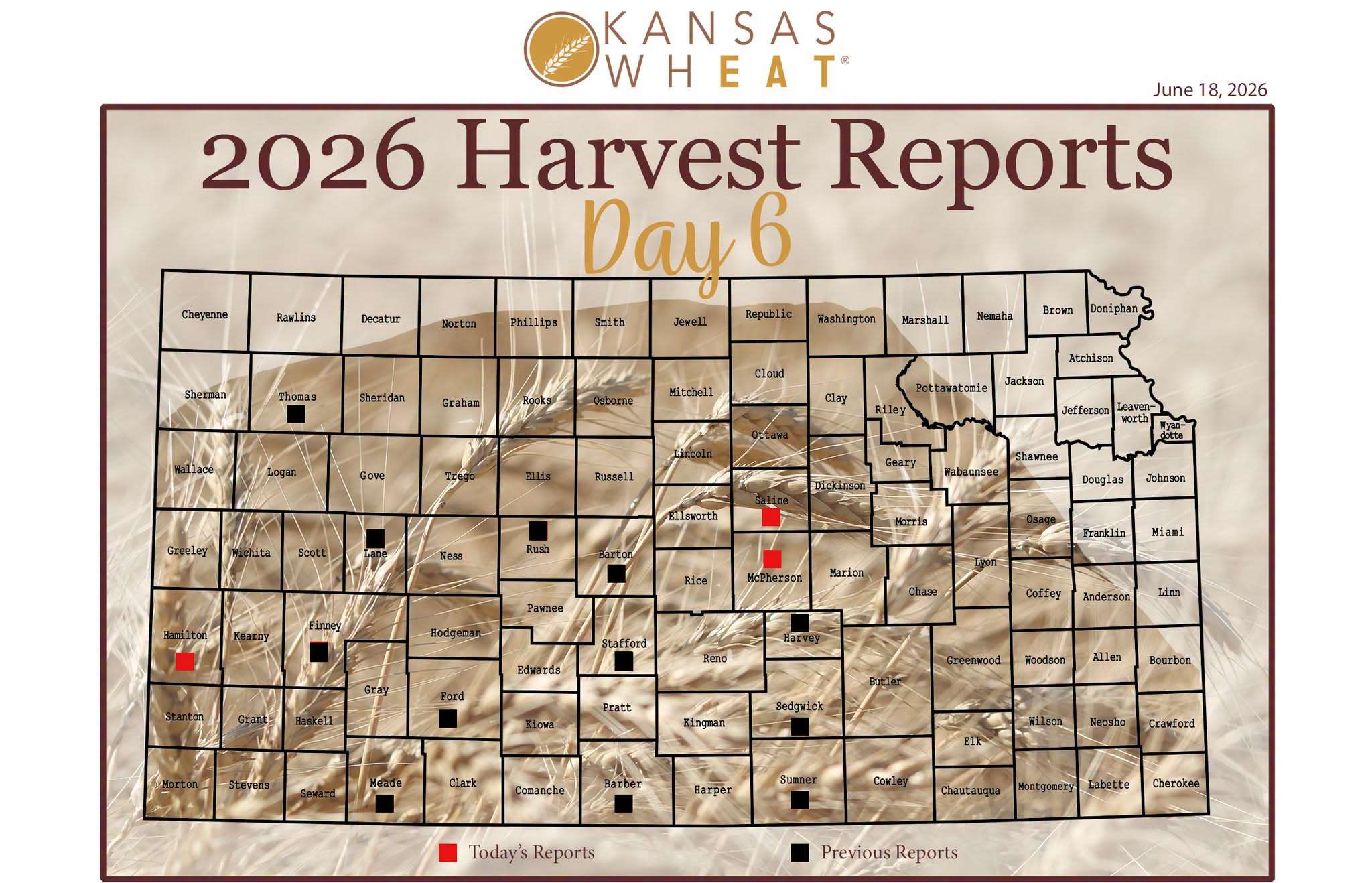
This is day 6 of the Kansas Wheat Harvest Reports, brought to you by the Kansas Wheat Commission, Kansas Association of Wheat Growers, Kansas Grain and Feed Association and the Kansas Cooperative Council.
Harvest moves steadily across the state of Kansas while navigating through a challenging season. Producers have reported being delayed in harvest due to scattered thunderstorms in their areas; others are reporting they have completed harvest for the season.
Derek Sawyer, a farmer in McPherson County, reported finishing up wheat harvest on June 15.
“We started cutting but had to stop several times, so we didn’t take our first load in until June 5,” said Sawyer. “Yields were significantly lower compared to last year, but still better than I expected.”
Sawyer reported protein levels ranging lower than previous years, with the best two wheat varieties being AgriPro’s AP Prolific and Kansas Wheat Alliance’s KS Providence.
“I believe in 2012 we had an early finish like this; we started earlier than we did this year,” said Sawyer. “We may have been finished by the first week of June. This year was progressing as quickly as it did in 2012, but the rains and the cooler temperatures at the end of May slowed the progress.”
Trenton Olson, a farmer from Saline County, began cutting wheat on June 5 with many delays in progress from extreme weather, with one storm generating 113 mph winds. He estimates that they are roughly 60 percent done with harvest. They are seeing protein levels in the 12s (percent) and test weights higher than expected.
“This year is unique in the way that we’re out here dealing with unprecedented circumstances,” Olson said. “We didn’t get the weather we needed in the spring, and now we’re not getting the weather we need to get grain into the bin.”
With all of the aggressive weather around Saline County over the past few weeks, there has been some shattering and widespread hail damage. What the Olsons have cut, speaks to the variability of wheat harvest 2026, with fields ranging from five to 40 bushels per acre. Some varieties that were impressive in this area are KS Providence and Limagrain’s LCS Warbird AX.
“Despite all the challenges that we’ve gone through, wheat is still important,” said Olson. “It’s an important aspect of our food chain, and we need to keep getting acres planted despite all of the frustrations with it this year.”
Down in Hamilton County, Ellie Hatcher, grain merchandiser at Scoular, reports they are about 50 percent done with harvest in the area.
“At our location, I’d say we are in the middle of harvest. We do have some producers wrapping up,” said Hatcher. “We aren’t on the back side of harvest yet, but getting close.”
Hatcher states they took their first load on June 10, yielding bushels lower than last year with a wide range of protein levels, averaging a little over 12 percent.
“Between drought and an early May freeze, our yields suffered,” said Hatcher. “I think going into harvest, producers’ expectations of what they would cut on yield was pretty realistic. They knew going in it would be a pretty tough harvest.”
When speaking to how the early harvest affected them and the producers in the area, Hatcher attributed untimely weather causing delays to producers getting into the fields to cut wheat that was ready.
“We would get some scattered rains, which was great for the fall crop going in the ground, but then delayed planting,” said Hatcher. “It was hard for some producers to get started with harvest with everything else going, but the wheat was ready. I’d say the wheat was ready before the first combine was rolling.”
The 2026 Harvest Report is brought to you by the Kansas Wheat Commission, Kansas Association of Wheat Growers, Kansas Grain and Feed Association, and the Kansas Cooperative Council. To follow along with harvest updates on X, use #wheatharvest26. Tag us at @kansaswheat on Facebook, Instagram and X to share your harvest story and photos.
###
Written by Shelby Priddle, assistant director of communications, Kansas Wheat