


By MIKE COURSON
Great Bend Post
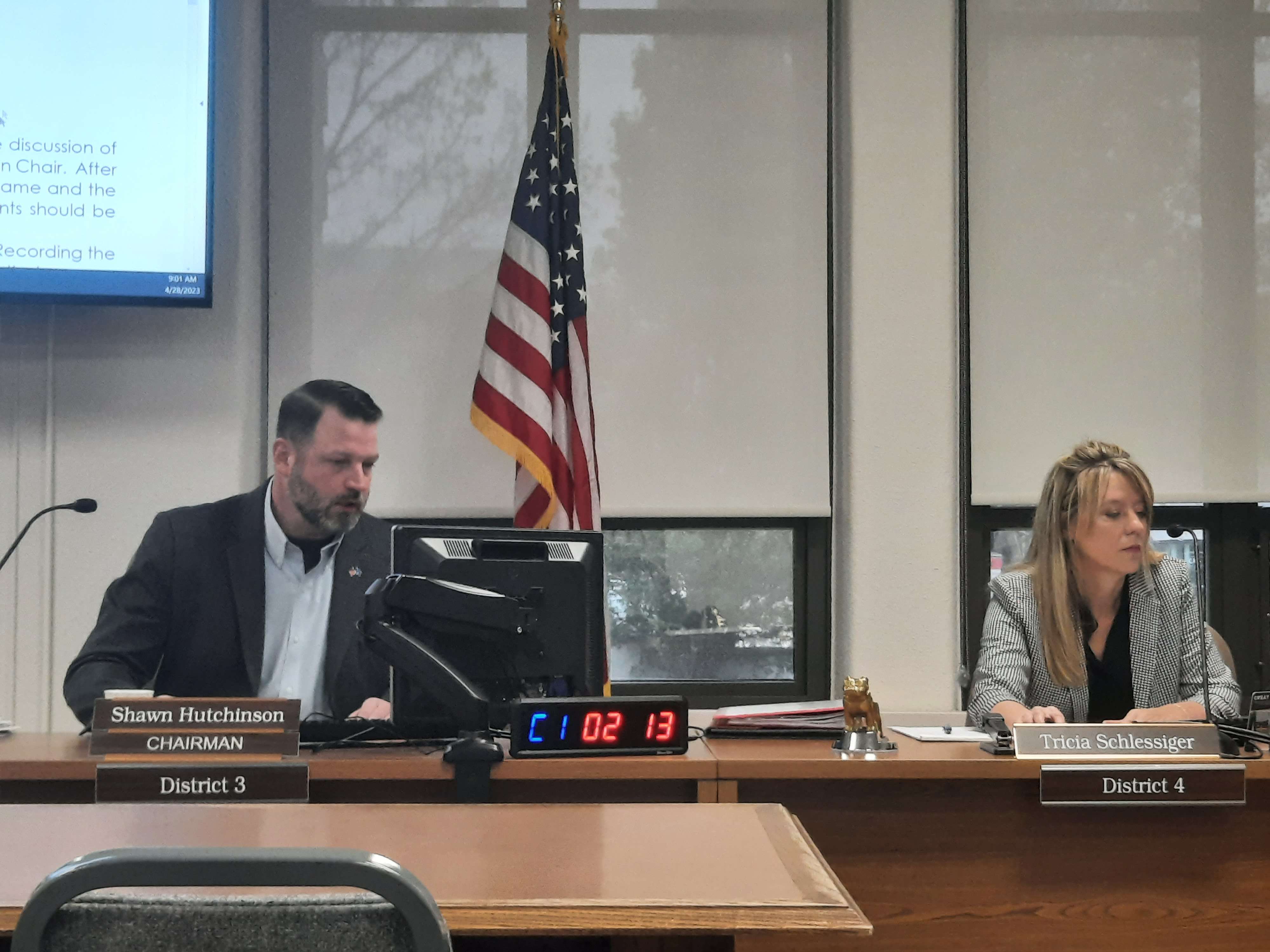
The Barton County Commission held a special meeting Friday morning to meet deadline requirements for 20th Judicial District Juvenile Services and Central Kansas Community Corrections. The body approved the request for a state grant for Juvenile Services, and approved CKCC's fiscal year 2024 comprehensive plan.
On April 25, a motion went before the CKCC Advisory Board suggesting no changes were needed for the Matrix. The board voted 7-2 in favor of keeping the Matrix as is. Two board members abstained from the vote, and two members did not vote.
"The Matrix is important because it gives discretion to the officers to have a pick list to individual responses for folks to get that change we want from them that helps them to be successful," said CKCC Director Amy Boxberger. "It's not only just for the moment. We're looking at longterm."
Contingent on receiving quality assurance reports monthly, the commission approved the comphrensive plan submission 5-0. The commission also appointed Sharon Wondra to the CKCC Advisory Board. Commissioner Tricia Schlessiger said law enforcement agencies need to continue working together.
"I definitely think we need to see more communication across the board between law enforcement and community corrections," she said. "I feel like there have been some hurt feelings, maybe, on both sides so now they aren't communicating. Every director I talked to stressed how important it was to have that partnership."
CKCC will receive $680,724.15 from the state of Kansas for its programming. Boxberger said the state has set a goal of 75 percent of community correction clientele closing out supervision without going to prison. For fiscal year 2022, CKCC had a nearly 85 percent success rate. The rate is hovering around 25 percent for the current fiscal year.
The commission also approved the 2024 budget request for Juvenile Services. The agency will receive $1,417,263.32 from the state for its programming. Just over $33,000 will go toward prevention, $807,000 to graduated sanctions, $320,000 for Juvenile Corrections Advisory Board programming, and $256,000 for reinvestment funds.