


By ELLE HUTCHINSON
Barton County Media Consultant
Central Kansas Community Corrections is adding another tool to strengthen accountability, support recovery, and improve community safety after securing a $59,718 federal grant for a new sweat patch drug monitoring pilot program.
During this week’s meeting, CKCC Director Brooke Haulmark presented the award to the Barton County Commission following months of work with Hometown Grants, Barton County’s grant writing partner. The application was submitted through the Kansas Criminal Justice Coordinating Council for a 2027 Federal Edward J. Byrne Memorial Justice Assistance Grant.
The Commission accepted the award, which will allow CKCC to purchase sweat patches and pilot the new testing method across the five counties it serves. The grant requires no County match.
Substance testing is an important part of community corrections, helping officers hold individuals accountable while also identifying substance use patterns that may indicate a need for additional treatment or support.
The new sweat patches provide CKCC with a particularly useful alternative to traditional urine testing. CKCC conducts observed urine testing using same-sex staff. With approximately 90% of its clients being male and staffing that has at times been predominantly female, obtaining observed samples can be challenging.
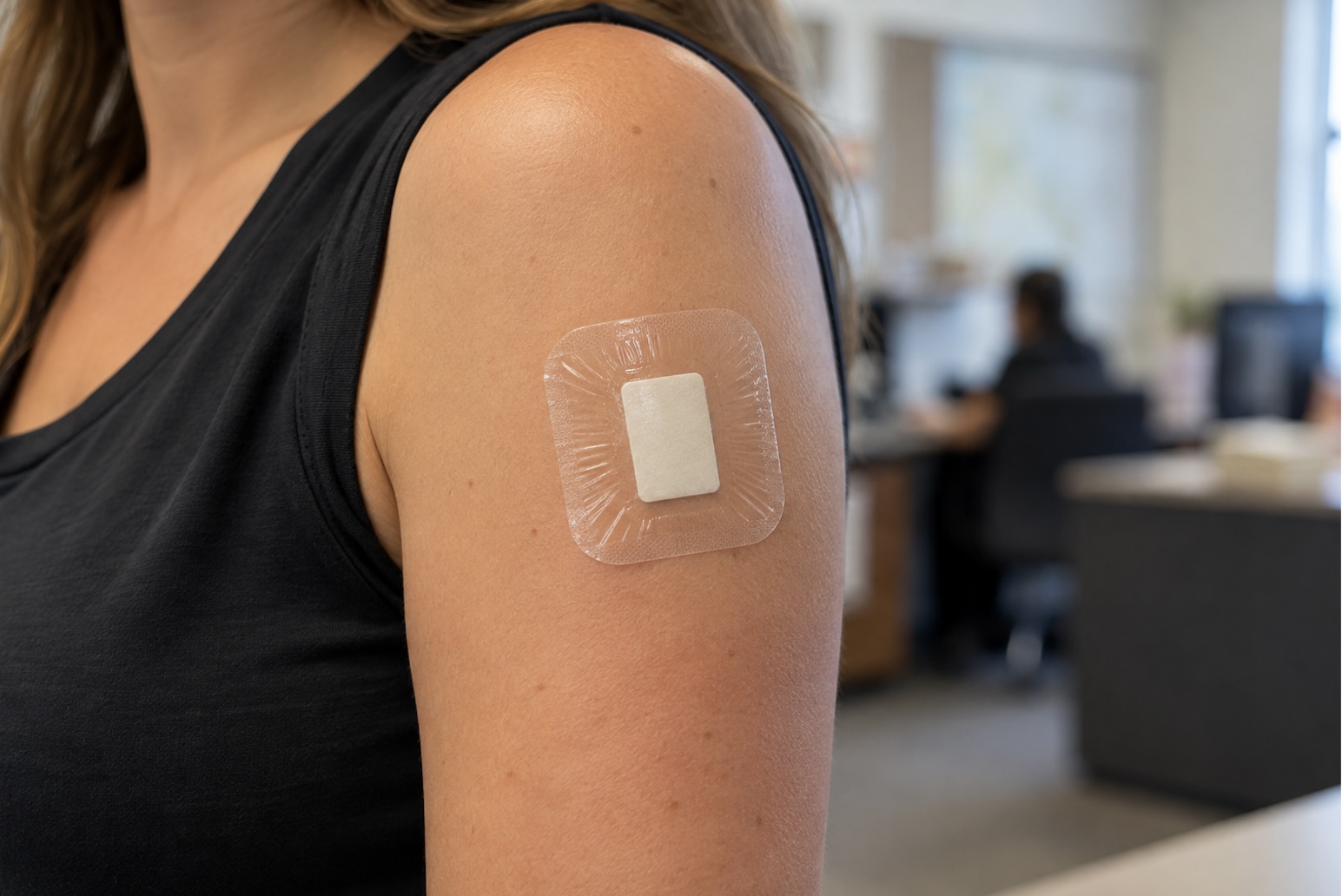
The sweat patch eliminates that barrier while providing a much longer monitoring window. Once applied to the arm, the tamper-resistant patch continuously collects evidence of substance use throughout the wear period. It can also detect drug use occurring approximately 24 to 48 hours before the patch is applied and may be worn for up to 14 days. Once removed, the patch is sent to a laboratory for testing.
That continuous monitoring is especially valuable for CKCC, which supervises individuals throughout a five-county area. Rather than providing information from only a single point in time, the patches can help officers identify substance use occurring between appointments, even when clients are traveling for work or cannot be seen in person each week.
Haulmark also noted that the less invasive testing method can benefit individuals who have experienced trauma while continuing to provide the accountability required through community supervision.
“I think the benefits that we would see from this extend much further than we know,” Haulmark said.
She shared that some individuals who have struggled with substance use for decades are now experiencing extended periods of sobriety and have even expressed interest in using the patches as another way to help hold themselves accountable.
The pilot will also provide CKCC with valuable data to evaluate how effective the technology could be as part of its long-term supervision efforts.
Haulmark thanked Hometown Grants and the Barton County Commission for their support throughout the application process, noting that securing the federal award required months of research, data collection, and preparation.
Commissioners praised the effort and expressed excitement about adding another option to CKCC’s existing testing and supervision tools.
For Barton County, the award is also another example of the impact of its partnership with Hometown Grants. By providing departments and community partners with professional grant writing assistance, the County continues to pursue outside funding opportunities that can strengthen services and bring additional resources back to the communities it serves.
For CKCC, those resources will now provide a new way to support accountability, identify substance use, connect individuals with appropriate treatment, and ultimately help protect the communities it serves.
(This grant project is supported by subgrant number 27-JAG-01 awarded by the Kansas Criminal Justice Coordinating Council for the Federal Bureau of Justice Assistance, Office of Justice Programs, U.S. Department of Justice as administered by the Kansas Governor’s Grants Program. Points of view or opinions in this document are those of the author(s) and do not necessarily represent the official position or policies of the Kansas Criminal Justice Coordinating Council, Kansas Office of the Governor, or the U.S. Department of Justice.)