


By DALE HOGG
Barton County Media Consultant
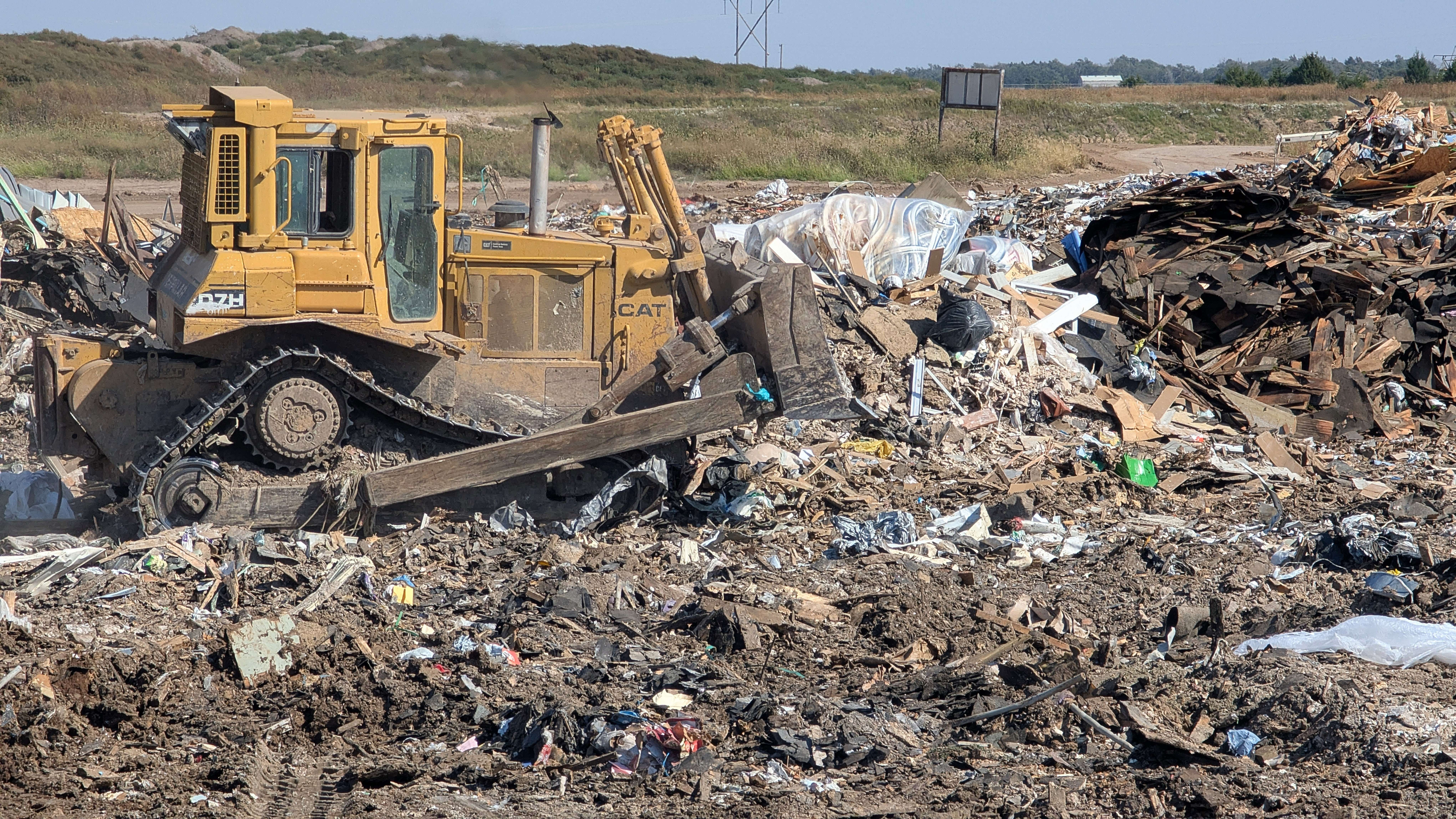
The Barton County Landfill is facing a persistent and dangerous challenge due to the increasing volume of lithium-ion batteries ending up in the regular trash stream, posing a serious fire and explosion risk for employees and the facility.
Lithium-ion batteries, which power everyday items such as smartphones, power tools, small appliances, and vape pens, are considered significantly more dangerous than standard batteries when improperly disposed of.
"Lithium-ion batteries are considered more dangerous than regular batteries due to their potential for thermal runaway, which can lead to fire or explosions," said Jennifer Hamby, Barton County solid waste director.
When these batteries are punctured, crushed, or damaged within the waste stream, they can rapidly overheat and ignite. Landfill staff constantly monitor incoming waste for battery-containing devices to mitigate the risk.
"When a lithium battery is punctured or damaged, it can erupt or ignite, causing fire and possible injuries," Hamby said. "After a battery fire is extinguished, it can reignite up to a week after the fact."
To address this growing hazard, the landfill is actively exploring collection solutions and increasing public awareness through its Household Hazardous Waste (HHW) program. Hamby is also in discussions with state regulators at the Kansas Department of Health and Environment and other landfill operators to combat the issue.
“There are no easy resolutions,” Hamby said.
They also now have a fire truck onsite, one designed to fight fires in challenging terrain and have installed a thermal camera that detects hotspots and alerts staff 24-7 to potential flare-ups.
Hamby emphasized the critical importance of proper disposal and handling by the public. Facility scale clerks try to scan loads as best they can for the batteries, but they still slip through.
"Please do not smash or damage phones or any lithium battery-containing device that still has the battery in it!" she stressed.
Residents are urged to take all lithium-ion batteries and battery-containing devices to designated recycling or HHW drop-off points rather than placing them in the trash.
Hamby said they don’t have any way to wipe data off the devices, noting they just remove the batteries. "I just want people to make sure the batteries are removed from the device before they smash it, possibly causing a reaction and getting hurt/causing fire.”
Some of those batteries are difficult to take out, she said. But they have tools to do that.
Although lithium batteries are the main threat, Hamby said all batteries can be a problem and not just tossed into the trash.