


BUSINESS NEWS
When Wendy Lockwood came away from a recent meeting, she was thankful that participants “were aware of the vital importance of behavioral healthcare and the value of the CCBHC model in delivering that care.”
Lockwood is executive director of The Center for Counseling & Consultation, 5815 Broadway; CCBHC stands for Certified Community Behavioral Health Clinic. The Center became a fully licensed CCBHC last year.
This model of care takes the holistic approach of caring for the whole person. In addition to care coordination, case management and all the traditional forms of therapy, a CCBHC offers housing, employment and veterans’ specialists, along with medication-assisted treatment and a pharmacy.
Thirty-five local and area stakeholders attended the meeting, which The Center hosted. Participants included: The Center’s employees and board of directors’ members; law-enforcement officers; Kansas legislators; four of the five Barton County Commissioners; representatives of Juvenile Services and Central Kansas Community Corrections; and a hospital administrator.
“This was an exceptional turnout of community decision-makers and funders,” Lockwood commented. “We appreciate these community partners’ commitment to our efforts to address affordable and accessible behavioral healthcare.”
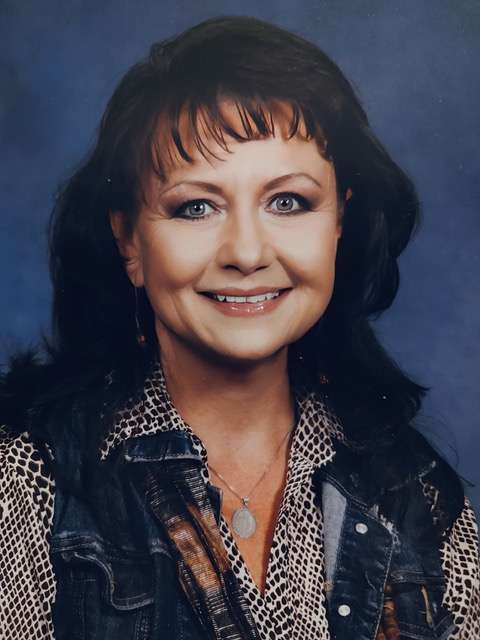
Rep. Sherri Brantley, who attended the meeting, said she was grateful to make connections in person and learn more about a CCBHC “because it looks deeper into a person’s background and tries to discover the core issues. For example, are poverty, homelessness and/or drugs and alcohol involved in behavioral concerns?”
Because of Brantley’s 37 years of experience in education at all levels, she is especially concerned about children and their families.
“Parents sometimes get a bad rap,” she commented. “It may appear they don’t want to solve behavioral problems but sometimes they just don’t know where to turn. The Center and other agencies are here for them.”
Brantley, who serves on the Kansas House Education and K-12 committees, will take what she learned at the meeting to “satisfy the needs of schools and other entities, and share information about funding. The more knowledge I have, the more specific I can be about legislation and finding funds to support it. That is my job.”
The state representative also expressed her gratitude to The Center for hosting the meeting. “It was phenomenal for them to step up and make this happen. I look forward to more discussions; this was not a one-and-done deal.”
Survey results
Participants also learned the results of a recent Kansas public-opinion poll, which show an increasing awareness of mental-health needs and strong support for continued investment in community services, said Michelle Ponce, associate director of the Association of Community Mental Health Centers of Kansas.
Ponce and Kyle Kessler, executive director of ACMHCK, made presentations at the local meeting.
“The survey illustrates that the increase in awareness and support since 2020 is quite significant,” Ponce reported. “For instance, when asked if they or someone they knew had experienced mental-health issues, 48 percent of respondents said ‘yes’ in 2019. It was 51 percent the next year and increased to 75 percent this year.”
Ponce speculates there are a number of reasons for this, including decreased stigma, particularly in younger generations; increased awareness of the impact of social isolation; increased rates of anxiety and depression after the global pandemic; and the normalization of mental-health care.
Another survey question asked if there should be continued investment in community mental health. In 2019, 67 percent said ‘yes’ and in 2020 the number was 60 percent. But this year, it increased to 89 percent.
“As awareness of needs grows, so does support for investing in services to meet those needs,” Ponce said.
Ponce also wanted to thank “Wendy Lockwood and her staff for their hospitality but more important, for the work they do every day to serve the community. This work truly saves lives. We also appreciate the meeting attendees who took time from their busy schedules to discuss community mental health.”
ACMHCK
Kansas has 26 licensed community mental health centers, serving all 105 counties and providing 24/7 services regardless of ability to pay.
“This system is a safety net for behavioral health,” Ponce noted. “In recent years, the system has undergone a dramatic transition to the CCBHC model and now all Kansans have access to these expanded services.
“It truly is a game-changer because it greatly increases community services that include enhanced care coordination, as well as expanded outpatient crisis and substance-use-disorder services to meet mental, physical and social needs.
“In addition, it changes the way clinics are reimbursed for services to fully cover the true cost and allow for long-term sustainability.”
The significant investment by the State of Kansas in the CCBHC model, “for which we are very grateful, will continue to modernize the system to best meet Kansans’ needs,” Ponce added. “A recent statewide study predicts that for a 40 percent increase in cost, the CCBHC model will provide a 75 percent increase in access to care.
“That is an amazing return on investment and one that our opinion poll indicates is widely supported by Kansans.”
The Center for Counseling & Consultation, a Certified Community Behavioral Health Clinic, 5815 Broadway in Great Bend, serves Barton, Pawnee, Rice and Stafford counties. Professionally trained personnel offer: individual and group therapy; marriage and family counseling; community-support services; community-based services; psychosocial rehabilitation; peer support; and medication management. The confidential 24/7 crisis hotline number is 800-875-2544.