


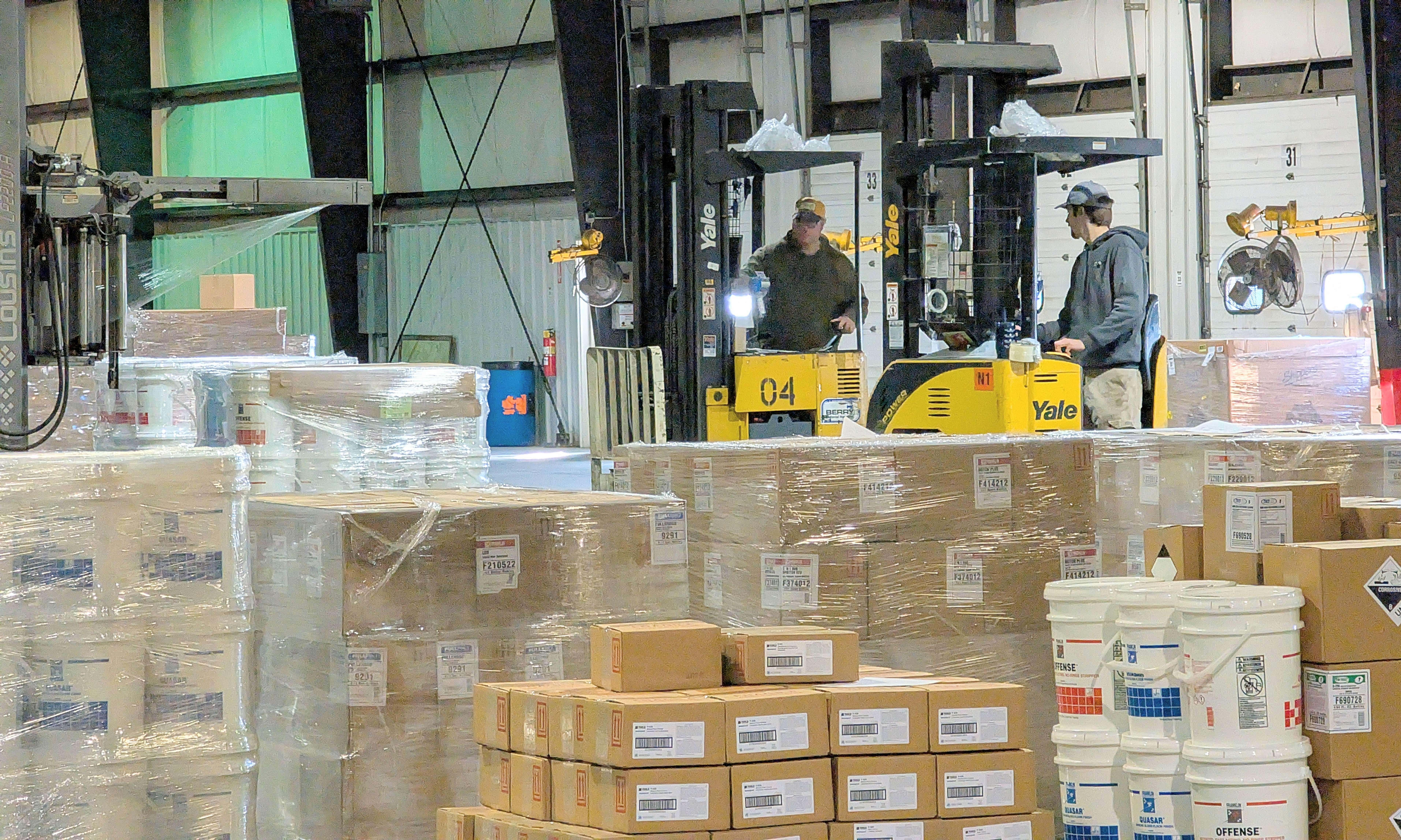
Fuller Industries Inc, like businesses nationwide, faces a shifting landscape of international trade costs after the Supreme Court ruled Friday that the Trump administration’s use of the International Emergency Economic Powers Act (IEEPA) to impose global tariffs was illegal.
The 6-3 decision effectively strikes down billions of dollars in active duties, but the reprieve for importers may be short-lived. Adding to the uncertainty over the weekend, the administration moved via executive order to reinstate many of the costs using Section 122 of the Trade Act, a mechanism allowing for temporary 15% tariffs for up to 150 days.
“It’s kind of like aiming at a moving target,” said Chris Cowles, vice president of operations for the Great Bend-based legacy commercial cleaner manufacturer. The on-again-off-again tariffs have created logistical challenges.
But, “we are not leaving our margins at the mercy of fluctuating trade policies," he said. "By diversifying our raw material sourcing and shifting our emphasis as much as possible to domestic suppliers, we are building a more resilient supply chain that can handle these fluctuations, and this benefits us and our customers alike."
Neil Bradley, the U.S. Chamber of Commerce’s chief policy officer, said the move represents a shift in legal strategy rather than a change in economic direction.
"The long story short is that tariffs haven't gone away," Bradley said. "They simply shifted the legal authority for those tariffs."
The new Section 122 duties were expected to take effect Tuesday, Feb. 24. While the Supreme Court ruling halted the IEEPA-based tariffs, it did not affect specific duties
already in place, such as Section 301 tariffs on Chinese goods or Section 232 tariffs on items such as steel and aluminum.
Bradley said the ruling also triggers a massive logistical challenge: the potential refund of more than $130 billion collected under the now-invalidated IEEPA authority. While the Department of Justice previously suggested refunds would include interest, the administration has yet to establish a formal recovery process.
Bradley warned small business owners to be wary of emerging scams or "refund recovery" firms offering to buy the rights to these claims for a fraction of their value.
"Until we know what the process looks like, to my mind, it seems pretty premature to sign on to any type of service that promises you to accelerate that," Bradley said.
The U.S. Chamber of Commerce continues to advocate for a "zero-to-zero" tariff policy, arguing that duties function as a tax on domestic businesses and consumers.
"Tariffs are taxes," Bradley said. "They kind of distort the economy; they ultimately end up costing businesses and consumers more money."
About Fuller Industries Inc.
Based in Great Bend, Kan., with a rich heritage dating back over a century to the Fuller Brush Man, Fuller Industries is a leading American manufacturer of industrial products, including cleaning chemicals and supplies, as well as brooms, mops, brushes and more. Fuller serves manufacturing, commercial, institutional and agricultural clients across the Western Hemisphere. Call 620-792-1711 or visit Fullerindustriesllc.com.