


By MIKE COURSON
Great Bend Post
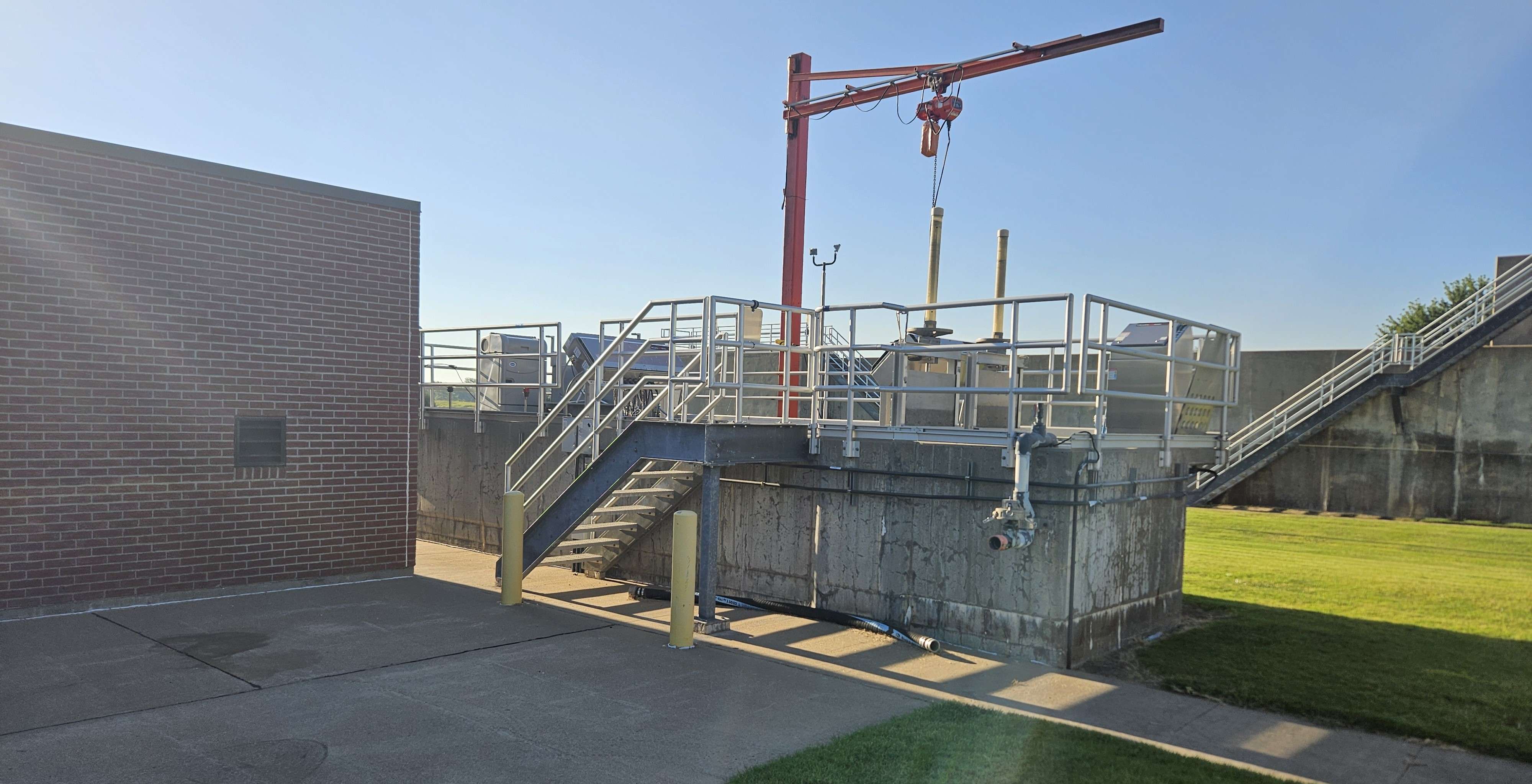
The city of Great Bend takes pride in its ability to deliver clean water to its residents. During last Monday's city council meeting, just before his promotion to utilities director for the city, Darren Doonan sought approval for a slight departure on annual upkeep of the wastewater treatment plant's UV system that disinfects water. The council approved the purchase of new UV lights for $52,321.
"Normally this work is split up into invoices throughout the year," Doonan said. "This year, we did not do that with the threats of tariffs and how all that federal political landscape worked out. Unfortunately, we're still getting hit with a surcharge, but it wasn't as bad as it would have been in the beginning of the year."
The National Pollutant Discharge Elimination System (NPDES) is a regulatory authorization that allows the city to discharge treated wastewater or stormwater into surface waters, such as rivers, lakes, or streams.
Holding an NPDES permit ensures many things, including compliance with the Clean Water Act, protection of public health and aquatic ecosystems, and legal authorization to discharge treated water. Trojan UV systems disinfect wastewater using ultraviolet light, which inactivates microorganisms by damaging their DNA so they cannot reproduce.
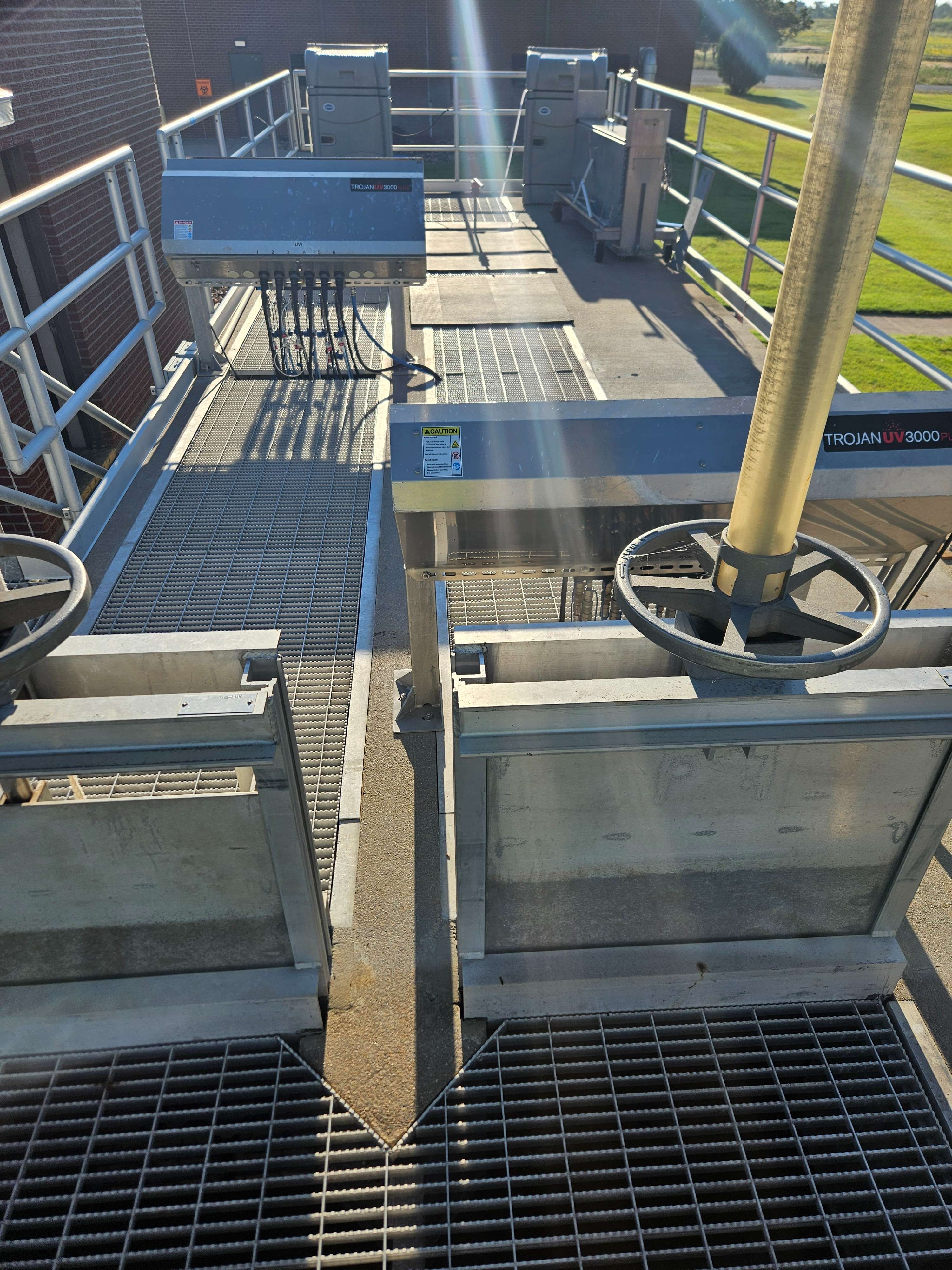
"UV is one of the last steps in our treatment process at the wastewater treatment plant," Doonan explained. "What UV does is it's what disinfects that water before it goes through our flow-in line into the discharge to the river. Basically, how it works is that UV light breaks the cells of these viruses and bacteria, and that's what keeps our water safe."
In Great Bend, water flows through two channels for UV treatment. The flow is carefully controlled to ensure consistent exposure time, and the lamps emit UV-C light, which is the most effective wavelength for disinfection.
"We have automatic wipers that clean the bulb sleeves, so it keeps those UV index numbers up where they need to be," said Doonan. "If there's a problem, it lets us know so we can take action on it."
The UV treatment is effective against many chlorine-resistant organisms like Cryptosporidium and Giardia, and can inactivate harmful microorganisms like E. coli, and fecal coliform before the treated water is discharged.