


By DALE HOGG
Barton County Media Consultant
Highlighting the importance of recycling, the Barton County Commission on Tuesday morning adopted an updated Solid Waste Management Plan, fulfilling a state requirement from the Kansas Department of Health and Environment to revise the county’s waste strategy every five years.
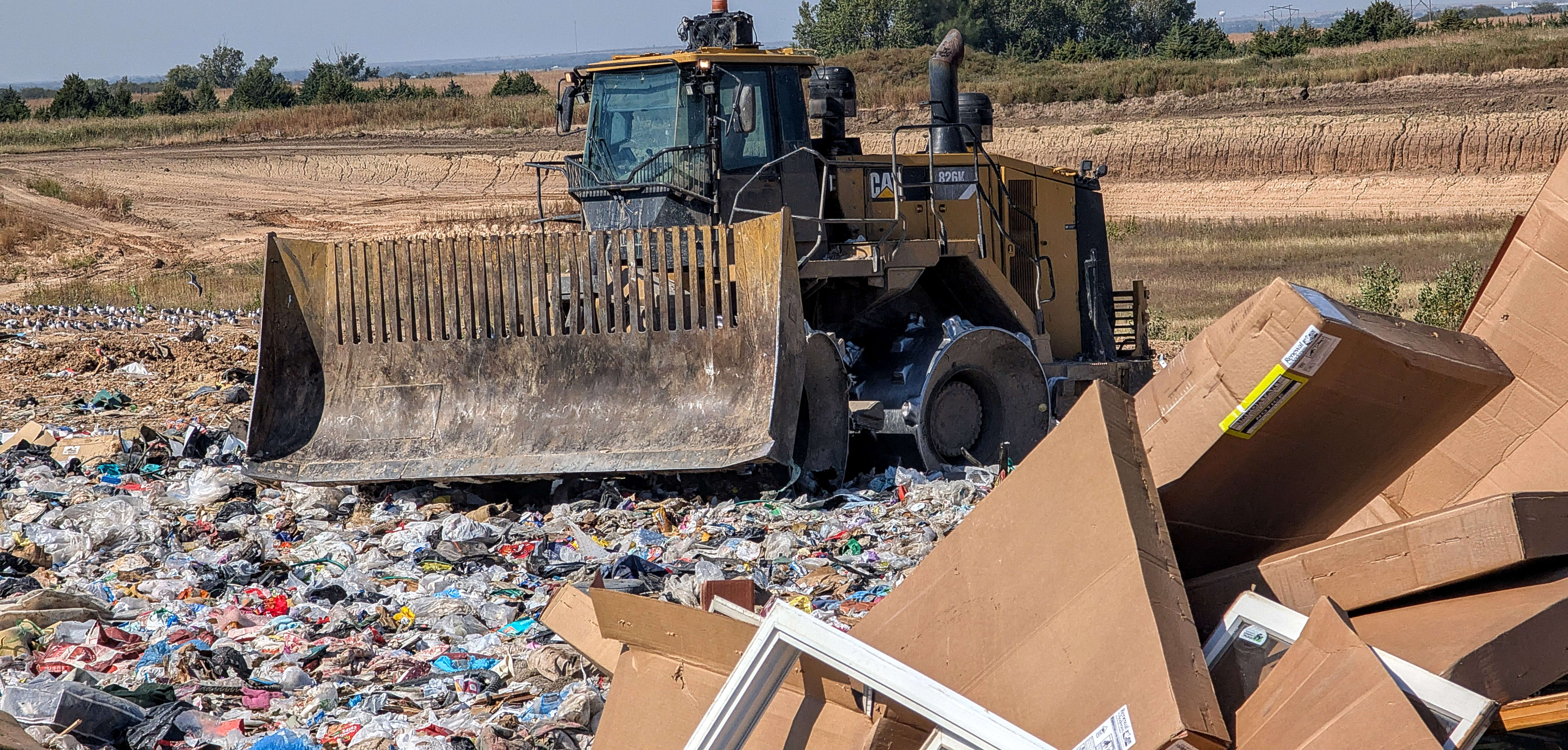
The plan, which now moves to the state for final approval, places a significant emphasis on recycling to extend the life of the county’s landfill, which currently has approximately 90 years of capacity remaining.
Solid Waste Director Jennifer Hamby presented the details of the updated plan following a public hearing at the Barton County Courthouse. She noted that the biggest focus of the update was the recycling section.
"The biggest focus was the recycling," Hamby said. "It needed some major updating. As far as the information, it wasn't there. So we updated the actual recycling activities, the material-recovery section, and the drop-off locations with hours of operation.
They added information about Sunflower Diversified Services and the recycling program it offers. In addition, they included details about Superior Essex, the Hoisington copper wiring maker that has, since 2014, been a zero-waste facility bringing no trash to the landfill.
Hamby stressed the importance of recycling as a way to extend the life of the landfill and lessen the need to extract new materials.
"We have about 90 years left at the landfill, so that's where we are in pretty good shape," Hamby said. "That's why recycling is so important, because you're extending the life of your landfill, plus you're lessening the need to extract new materials, which is hard on the environment."
The plan’s focus on recycling appears to already be yielding results in some communities. Hamby reported that since Stutzman’s Refuse took over the trash service for the city of Ellinwood, offering curbside recycling, the local recycling rate has increased by more than 50%, and continues to grow.
Commissioner Duane Reif, District 1, also noted the ease of recycling. "I’ve got two dumpsters, and it seems like the recycling dumpster fills up faster than the trash," he said, adding he believes the effort is "really a good thing" for saving the landfill.
During the discussion, Hamby identified the top three wastes brought to the landfill as food waste, plastics, and paper and cardboard. She noted that most of the waste in those categories could be recycled or composted.
Following the presentation, the commission voted to formally adopt the new plan.
The plan covers a broad range of solid wastes, including hazardous, residential, commercial, industrial and agricultural wastes, and addresses source reduction, reuse, recycling, composting, collection, transportation, storage, processing and disposal of all solid waste.