


For many of us, summertime usually means vacations and summer road trips. Now is a good time to review these summer driving safety tips. A little planning and some safety checks might spare you from dealing with the consequences of a breakdown — or worse, a highway crash.
Summer Changes
Air ConditioningAs the temperature rises, your A/C has to work harder to keep your vehicle cool. Check A/C performance before traveling. A lack of air conditioning on a hot summer day affects everyone, but is particularly dangerous for people who are in poor health or who are sensitive to heat, such as children or older adults.
HeatstrokeThe summer months have proven to be especially deadly for children when it comes to vehicular heatstroke. Heatstroke in vehicles often occurs when a child is left alone in a parked vehicle or manages to get into an unattended vehicle. Never leave children alone in the car—not even for a few minutes. Vehicles heat up quickly. Even if the outside temperature is in the 70s and the windows are cracked, the temperature in a vehicle can rapidly reach deadly levels. A child’s body temperature rises 3-5 times faster than an adult’s.
Belts and HosesHigh summer temperatures accelerate the rate at which rubber belts and hoses degrade. Look under the hood and inspect all belts and hoses to make sure there are no signs of bulges, blisters, cracks or cuts in the rubber. It’s best to replace them now if they show signs of obvious wear. While you’re at it, make sure all hose connections are secure.
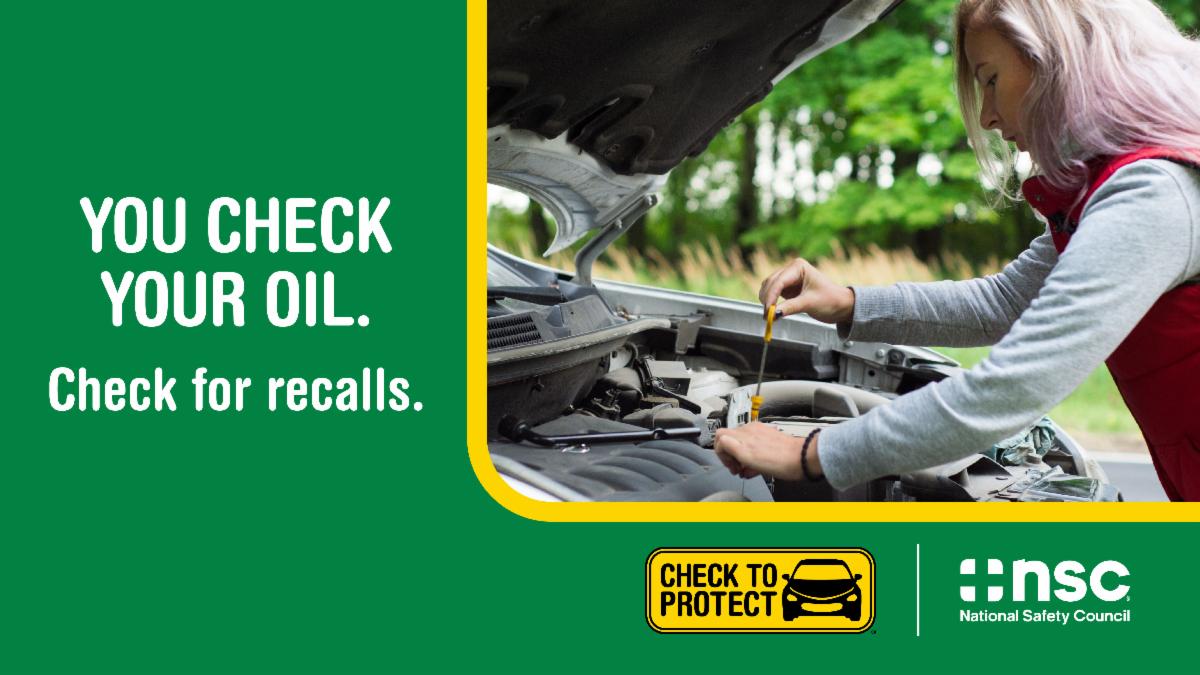
Vehicle ChecksCheck for RecallsNHTSA's Recalls Look-up Tool lets you enter your vehicle identification number (VIN) to quickly learn if your vehicle has a critical safety issue that has not been repaired, and how to get that repair done for free. You can also download NHTSA’s SaferCar app and enter your vehicle and equipment information. If a recall is issued, you’ll get an alert on your phone.
TiresMake sure each tire is filled to the vehicle manufacturer’s recommended inflation pressure, which is listed in your owner’s manual and on a placard located on the driver’s side door frame, and don’t forget to check your spare if your vehicle is equipped with one. Do not inflate your tires to the pressure listed on the tire itself. That number is the maximum pressure the tire can hold, not the recommended pressure for your vehicle.
A tire doesn’t have to be punctured to lose air. All tires naturally lose some air over time. In fact, underinflation is the leading cause of tire failure.
Some other tips:
- Inspect your tires at least once a month and before long road trips.
- Look closely at your tread and replace tires that have uneven wear or insufficient tread.
- Tread should be at least 1/16th of an inch on all tires. Look for the built-in wear bar indicators or use the penny test to determine when it’s time to replace your tires. Place a penny in the tread with Lincoln's head upside down. If you can see the top of Lincoln's head, your vehicle needs new tires.
- If you find uneven wear across the tires’ tread, it means your tires need rotation and/or your wheels need to be aligned before you travel.
- Check each tire’s age. Some vehicle manufacturers recommend replacing tires every six years regardless of use.
An inspection is not just about checking tire pressure and age. Remember to check:
- for any damage or conditions that may need attention;
- the tread and sidewalls for any cuts, punctures, bulges, scrapes, cracks, or bumps. The tread should be at least 2/32 of an inch or greater on all tires; and
- your spare tire.
If you find tire damage, take your vehicle to a tire professional.
Cooling SystemMake sure you have enough coolant in your vehicle, and that the coolant meets manufacturer specifications. See your vehicle owner’s manual for recommendations on coolant. You or a mechanic should check the cooling system for leaks, test the coolant, and drain or replace old coolant as needed.
Fluid LevelCheck your vehicle’s oil level periodically. As with coolant, if it’s time or even nearly time to have the oil changed, now would be a good time to do it. Also check the following fluid levels:
- brake
- automatic transmission or clutch
- power steering
- windshield washer
Make sure each reservoir is full; if you see any signs of fluid leakage, take your vehicle in to be serviced.BatteriesHave a mechanic check your battery, charging system, and have them make any necessary repairs or replacements. For hybrid-electric vehicles, keep gasoline in the tank to support the gasoline engine.
LightsCheck your headlights, brake lights, turn signals, emergency flashers, and interior lights. Be sure to also check your trailer brake lights and turn signals.
Wiper BladesAfter winter storms and spring rains, windshield wiper blades may need to be replaced. Like rubber belts and hoses, wiper blades are vulnerable to the summer heat. Examine your blades for signs of wear and tear on both sides. The blades can also deform and fail to work properly in both directions. If they aren’t in top condition, invest in new ones before you go.
Floor MatsImproperly installed floor mats in your vehicle may interfere with the operation of the accelerator or brake pedal, increasing the risk of a crash. Follow the manufacturer’s instructions for mat installation and use retention clips to secure them. Always use mats that are the correct size and fit for your vehicle.

Protect Yourself and Loved OnesSeat BeltsBuckle Up. Every Trip. Every Time. Ensure that everyone in your vehicle is buckled up in age- and size-appropriate car seats, booster seats, or seat belts.
Car Seats
- Remember that all children under age 13 should always ride properly buckled in the back seat.
- Make sure car seats and booster seats are properly installed and that any children riding with you are in the right seat for their ages and sizes. See
- NHTSA’s child passenger safety recommendations to find the right seat for your child’s age and size.
- Visit NHTSA’s Child Car Seat Inspection Station Locator to find a free car seat inspection station near you or to get information on virtual inspections.
- Never leave your child unattended in or around a vehicle.
- Always remember to lock your vehicle and to keep your keys out of reach so children do not play or get trapped inside.

Before You GoStock Your VehicleEven a well-maintained vehicle can break down, so it’s advisable to put together an emergency roadside kit to carry with you. A cell phone tops the list of suggested emergency kit contents since it allows you to call for help when and where you need it. Recommended emergency roadside kit contents include:
- Cell phone and charger
- First aid kit
- Flashlight
- Flares and a white flag
- Jumper cables
- Tire pressure gauge
- Jack (and ground mat) for changing a tire
- Work gloves and a change of clothes
- Basic repair tools and some duct tape (for temporarily repairing a hose leak)
- Water and paper towels for cleaning up
- Nonperishable food, drinking water, and medicines
- Extra windshield washer fluid
- Maps
- Emergency blankets, towels and coats
Plan Your RouteBefore heading out, make sure to check the weather, road conditions, and traffic. Don’t rush through your trip; allow plenty of time to get to your destination safely. And always familiarize yourself with directions and maps before you go, even if you use a GPS, and let others know your route and anticipated arrival time