


By MIKE COURSON
Great Bend Post
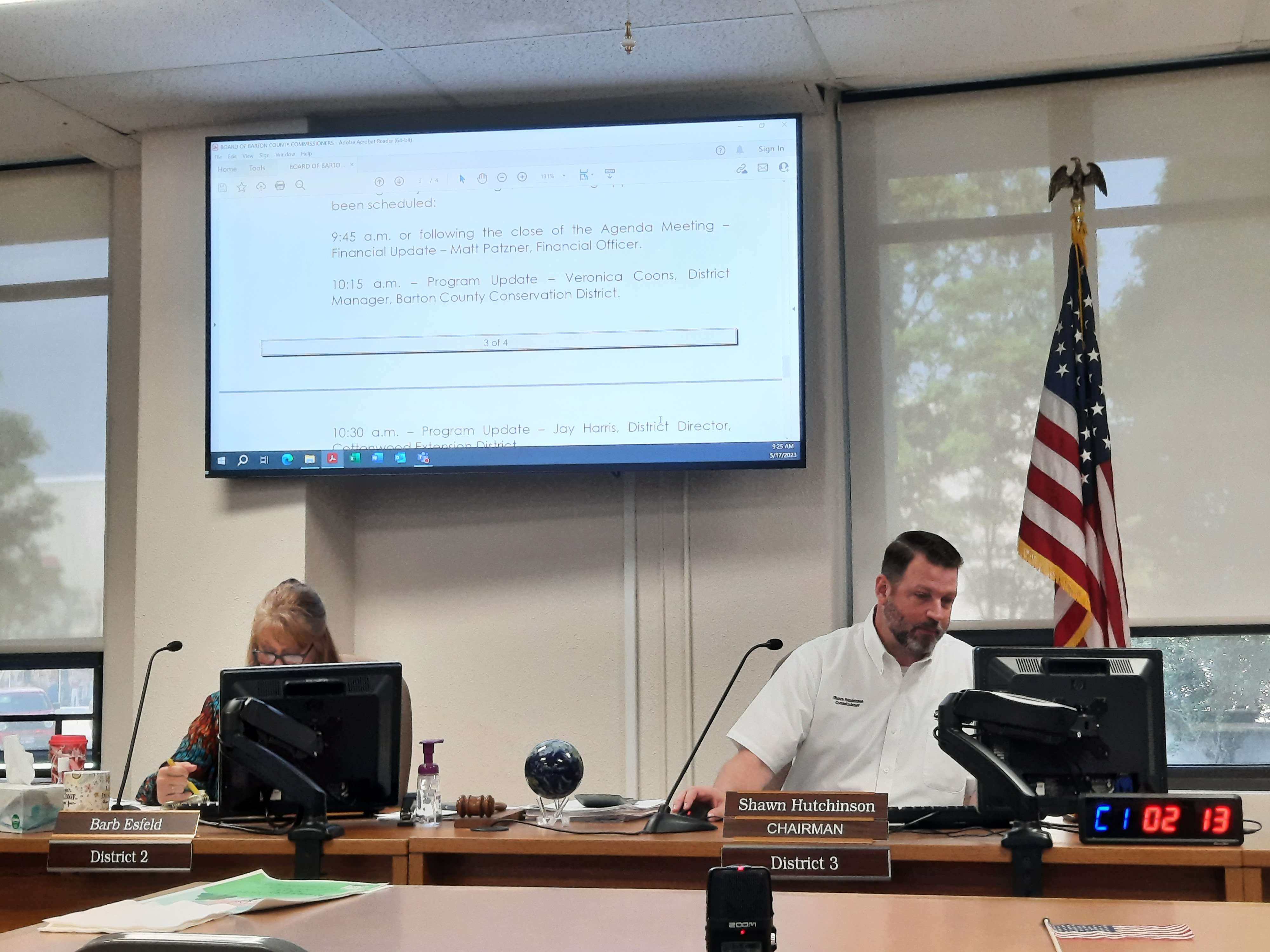
The Barton County Planning Commission works hard to serve both landowner interests and the interests of the county as a whole. Last summer, Planning Commissioner Mary Ann Stoskopf proposed an amendment to zoning regulations that would make certain changes to their property easier. Wednesday morning, the Board of Commissioners approved that proposal after a briefing from Zoning Administrator Judy Goreham.
"This is actually a pretty significant change that's going to make things a lot smoother for the applicants," Goreham said. "It's going to be something that puts a safety net in for the county."
Under current regulation, landowners must apply for a zoning amendment to operate small-scale businesses on their property. If the property is sold, those zoning changes remain in place, and the land could be used for purposes other than intended under the original application. Wednesday's changes eliminate that chance.
"Ninety-nine percent of the businesses that we get are very small mom-and-pop shops," said Goreham, "or they're someone that lives on a farmstead and wants to break off the ag and do something a little special like work on cars or whatever the case is."
The new regulation will incorporate the most common small-scale business types into existing definitions and eliminate the need for most zoning changes, which can now be covered by conditionally-permitted use permits, or conditional-use permits that will still require the planning commission to contact all landowners within 1,000 feet of the business. Any new structures associated with the businesses will still require a building permit.
Amendments will now allow for agriculture-related business, which is the sale and/or repair of agricultural equipment, machinery, and commercial agriculture products. This will be a conditionally-permitted use in an agriculture district.
Agritourism, such as a corn maze, is permitted use, which can happen without a review. It is permitted in several districts, including agriculture, commercial, and industrial. Agritourism is defined as activities conducted on an accessory to a working farm, ranch, vineyard, or other agricultural operation conducted for the enjoyment and/or education of visitors, guests, or clients to view or enjoy rural farming or ranching activities, and/or historic cultural or natural attractions.
Small-scale non-agriculture commercial businesses are defined as a small-scale commercial business operated or maintained by the owner or occupant of the land upon which the activity is being conducted. Outdoor storage or parking of automotive salvage shall not be permitted as a small-scale business.
Small-scale businesses shall be located and designated in a manner that mitigates impacts such as odor, noise, dust, glare, lighting, exhaust, smoke, etc. on any adjacent resident. Businesses and/or persons operating the business must maintain any county state or other required permits and/or licenses, and comply with all local, county, and state regulations. This is conditionally-permitted in agriculture, residential, and unincorporated community districts.