


Great Bend Post
A simple miscommunication may have led to “Hancock’s War,” a series of battles between the U.S. 7th Cavalry and Indian Tribes on the Kansas prairies in 1867. At the heart of those battles was Gen. Winfield Scott Hancock, who arrived at Fort Larned earlier that year. It made for an active period for soldiers stationed at the fort. On April 11, Fort Larned National Historic Site will host its Camp 11 event to reenact those days.
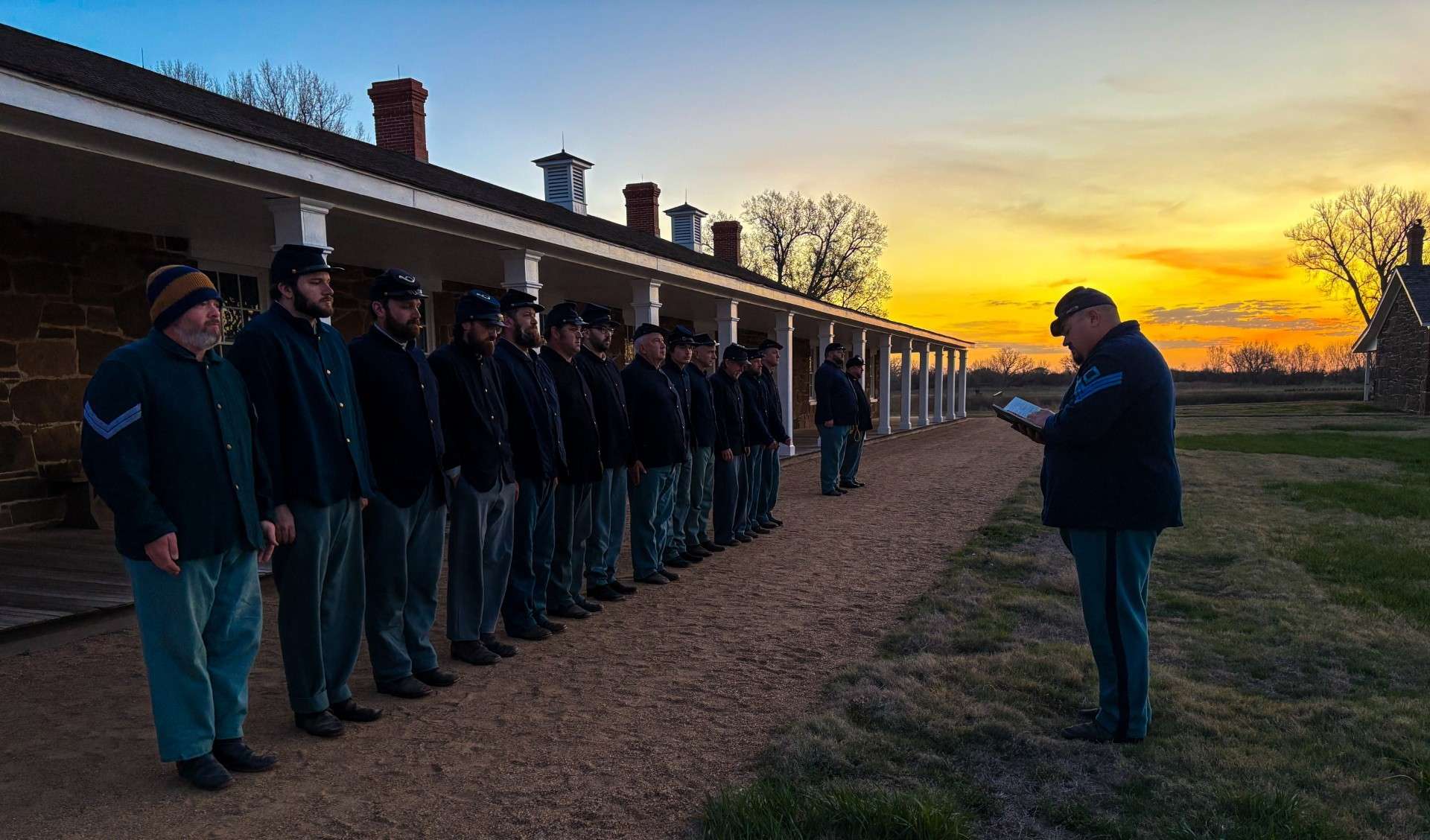
Camp 11 allows visitors to travel back in time as reenactors and living historians recreate Fort Larned as it would have functioned in 1867, for both soldiers and civilians. This year’s Camp 11 theme centers around performing Guard Duty by the book, meaning visitors will see guards around the fort protecting it from external and internal threats. This year’s event will be bigger and better than last, with more scenarios, more drill, and more frontier garrison life at the fort.
By the end of the summer of 1867, Hancock had been transferred to another command and was replaced by Gen. Philip Sheridan. Fort Larned later played a crucial role in ending the warfare that fall by supporting negotiations for the Medicine Lodge Treaty. Artifacts from the Cheyenne village destroyed by Hancock's troops are on display in the Fort Larned visitor center.
The 7th Cavalry continued to play a major role in American history for more than a decade, culminating in the death of Lt. Col. George Custer at Little Big Horn in Montana in 1876.