


By MIKE COURSON
Great Bend Post
The action taken during last Tuesday's tri-county commission meeting between elected officials from Barton, Pawnee, and Russell Counties involved sending the U.S. Department of Energy a letter of objection regarding federal involvement in a proposed National Interest Electric Transmission Corridor (NIETC) that would pass through all three counties. But questions remain about the Grain Belt Express project that has already been approved to pass through the area. A few residents at Tuesday's meeting asked about health and environmental impacts, including Barton County Conservation District Manager Veronica Coons.
"We aren't receiving real clear, specific information about how these proposed power lines are really going to affect farming and soil in this area," she said. "It needs to be more top of mind than it has been."
Coons said notice is given to endangered birds flying overhead or animals visible in fields, but little attention is paid to the microorganisms in the soil and how an energy project may impact them.
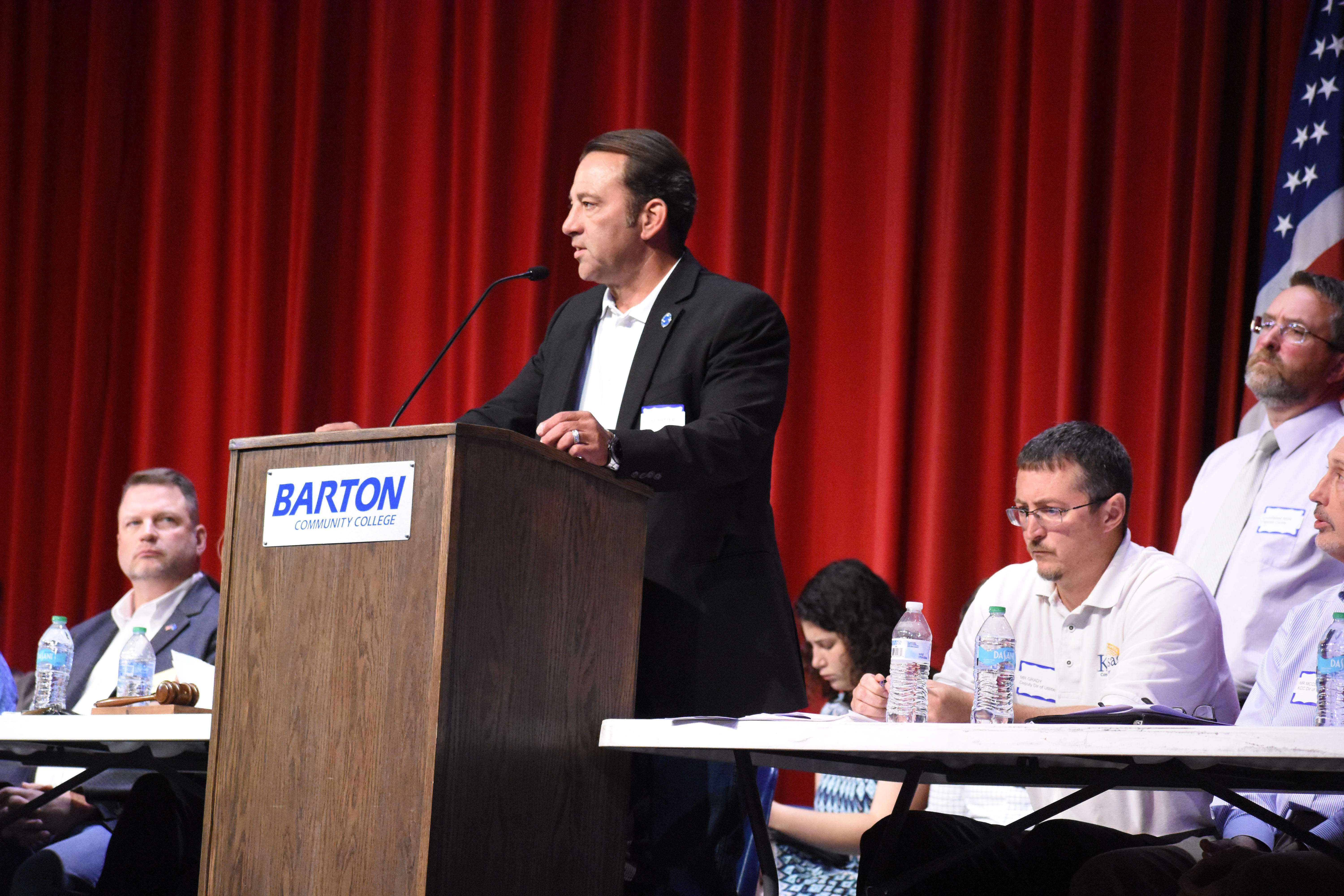
"We really just need to be concerned about what we're doing to our farmland," she continued. "I understand the need for power. I'm not somebody who is going to say we can't do anything; we can't come up with any new inventions or anything like that, but it can't just be about some company making a bunch of money somewhere. It has to be about our survival, too."
No answers were provided during Tuesday's meeting, but the Kansas Corporation Commission, which approved the Grain Belt Express in 2013, did provide several pages of written answers prior to the meeting. A Pawnee County resident submitted a question regarding health risks to humans, crops, and livestock.
"The KCC has found that there has never been an established causal relationship between (Electromagnetic Fields) and health effects," said the KCC in a written answer. "A June 2002 study from the National Institute of Environmental Health Studies showed that common household appliances like vacuum cleaners, refrigerators, and microwaves can produce a higher level of EMF exposure than a house 200-300 feet away from a 500kV transmission line.
"The U.S. electric transmission network consists of about 700,000 circuit miles of lines, including over 200,000 miles of high-voltage transmission lines (230 kilovolts (kV) and above) that people live, work, and play around each day. National Electrical Safety Code (NESC) requirements ensure safe line operations and personnel safety.
"All transmission lines produce electromagnetic fields (EMF). The balance of scientific evidence indicates EMF from transmission lines are not harmful to humans, and we are not aware of any studies that show adverse effects to crops or livestock from EMF exposure."
CLICK HERE to read the full report referenced by the KCC.
CLICK HERE for further research from the National Cancer Institute