


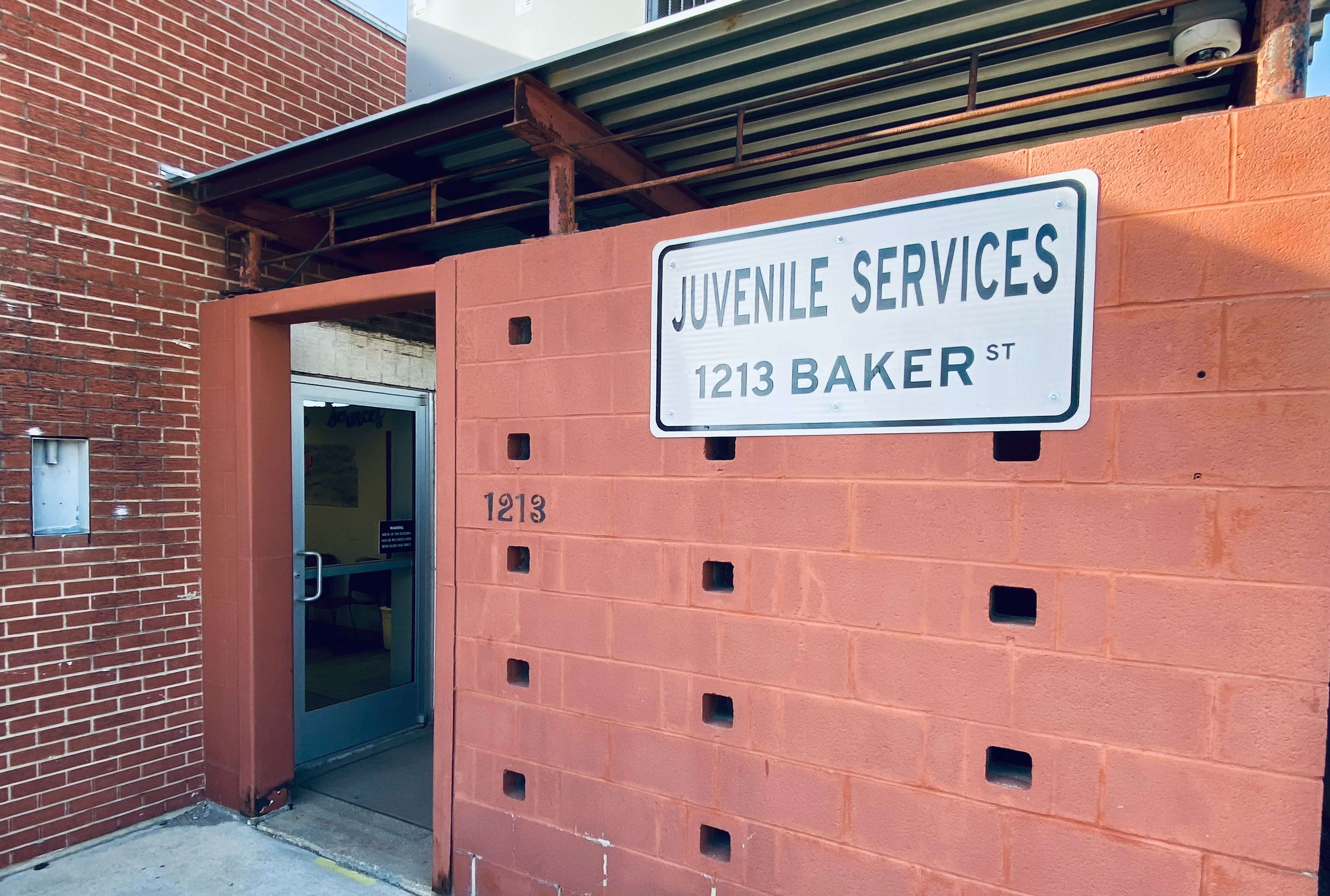
Two Juvenile Services (JS) staff members recently came back to the office “fired up” because of a training event that offered ideas for a relatively new program, as well as for one of their long-time practices.
Mike Daniel and Ryan Lichter, JS assistant directors, attended the sessions at the Restorative Justice Authority in Pittsburg, Kan.
The training focused on their mentoring program and motivational- interviewing techniques.
“We started our mentoring program about six months ago, with basically nothing,” Daniel said. “It has been steadily growing but this recent training allows us to substantially enhance the program.
“We wanted to learn about how other agencies were developing their mentoring programs. I am glad we discovered we are on the right track. Now we have more knowledge; we are fired up.”
Mentoring young people can cover just about any topic, with the most common being school, homelife and employment.
“Sometimes we just hang out with them, maybe even drive around town a little or play disc golf,” Daniel commented. “These simple activities offer a number of ways to start conversations.
“We also do some cognitive work with kids to help them make better decisions.”
This often involves a “what if” scenario. For example, when a young person is asked: what will happen if you drink alcohol? Answers could be: have an accident; police involvement; and a penalty for breaking curfew.
“We ask them to play the tape forward,” Daniel summarized.
Daniel and his colleagues also try to determine what triggered a bad decision. For instance, the trigger can result from a young person feeling powerless, disrespected, ignored, unloved or manipulated.
He is confident the mentoring program will succeed because of “really good support” from his JS colleagues, as well as from judges, attorneys and others.
Ryan Lichter
When Ryan Lichter and other JS staff members talk with clients, the goal is to “get them to open up a bit more, get them to take responsibility for their actions.”
The best way to start the conversation is with open-ended questions or comments; closed-ended questions oftentimes yield one-word answers.
For example, if a young person is asked ‘how’s your day going?’ the answer might be ‘okay.’
“But when I say ‘tell me about your day’ I get them to open up a little bit,” Lichter said. “Then I ask them to elaborate. This, along with positive feedback from me, can result in more of a give-and-take.
“We use this motivational-interview practice with kids and their families,” he continued. “When we can get them talking, we can find out what we are missing that we need to know. This is an important tool that may help them change negative behavior.”
Another main goal is to use client visits as a “prime opportunity to educate young people about figuring out their own solutions. Sometimes they reach that ‘aha moment’. This is what we want. Figuring things out on their own leads to the best results. Maybe they won’t need us as much or not at all.”
More information
Young people participate in JS programs after they have committed low- or high-level crimes, or because of behavioral problems.
Programs include Juvenile Intake & Assessment, Immediate Intervention, Intensive Supervised Probation and/or Community Case Management, depending on individual circumstances.
Lichter and Daniel expressed their appreciation to the Restorative Justice Authority for the special training in a relaxed atmosphere.
The RJA’s mission is to improve public safety, enhance clients’ and families’ accountability, and improve the client’s ability to live responsibly and productively through community-based programs.
Daniel and Lichter also noted the RJA helped them with information about documentation, orientation forms, and policies and procedures.
“They also are available to us anytime we have questions,” Lichter said. “We really appreciate their time and expertise.”
20th Judicial District Juvenile Services empowers youth in Barton, Rice, Ellsworth, Stafford and Russell counties to achieve positive outcomes by offering Juvenile Intake & Assessment, Immediate Intervention, Intensive Supervised Probation, Case Management, Journey to Change, Life Skills, All Stars and Youth Crew. Parents and guardians also are offered The Parent Project. Visit 1800 12th in Great Bend or call 620-793-1930.