


By MIKE COURSON
Great Bend Post
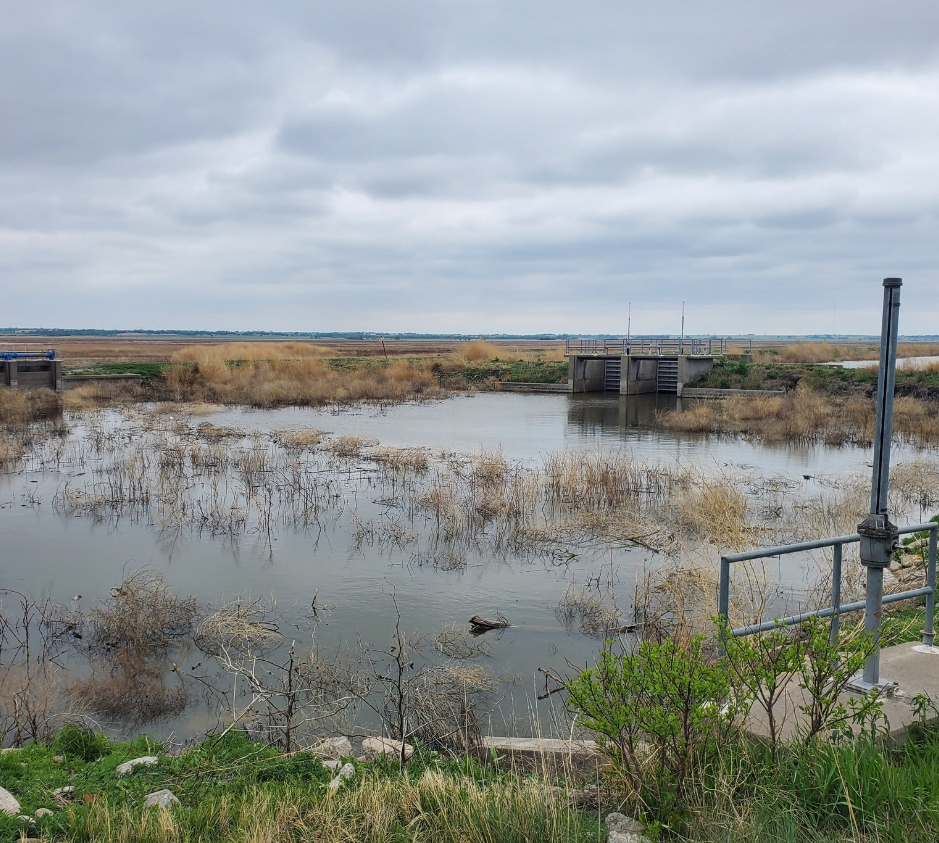
Several inches of rain cannot undo several months of drought in and around Cheyenne Bottoms. But every little bit helps. Wildlife Manager Jason Wagner reports the Bottoms has received approximately 5.3 inches of rain since May 18, but most of it has been absorbed by the ground.
"I think our soil moisture is just so depleted that it's really been going where it needs to go, and that's back into the ground to replenish that soil moisture," he said. "Once that soil moisture gets replenished, we should start getting some runoff."
The Bottoms may benefit more from rains west and north. Rains by Olmitz and Hoisington feed the Blood Creek that provides water to the Bottoms. Precipitation near Kinsley helps fill the Arkansas River. The Wet Walnut Creek is a primary source of water for the Bottoms, and Wagner said rains in the Ness City and Rush Center areas help that cause.
"I'm monitoring the USGS stream gauges throughout our drainage basin where we get some of our water," he said. "It looks like there's going to be a pretty good bump of water for a few days. I honestly prefer it if we get big rains out that way. That allows us to bring in the water and put it where we want it to a little bit better."
The Bottoms has water rights to the Arkansas River, Wet Walnut, and Dry Walnut Creeks. Those rights allow the wetland to divert a total of 37,360 acre-feet of water in a year. So far, just 700 acre-feet of water have been diverted from the Wet Walnut. Wagner estimates it would take 29,000 acre-feet of water to fill the Bottoms. Most of the time, local rains are sufficient to keep the Bottoms wet.
Wagner said the benefit of recent rains may not be apparent, but with more precipitation predicted over the coming week, those benefits may become more apparent.
"What it's doing is really priming the area for runoff, which we haven't had a whole lot of," he said. "These rains really helped out the soil moisture. Hopefully, now, we'll get to the point where we'll start getting runoff and start getting more benefit out of the rains."