


By MIKE COURSON
Great Bend Post
Tornadoes are known for their deconstructive capabilities, but straight-line winds exceeding 80 miles an hour pack a punch of their own. Monday, the National Weather Service out of Wichita conducted a survey in Great Bend to determine what caused widespread damage to homes and trees. Warning Coordinator Meteorologist Chance Hayes said winds up to 85 miles an hour blew through Great Bend, and that was enough to cause damage to structures like the First Southern Baptist Church at 19th and Harrison.
"We went back to old Google imagery, and you could see there was a 3-5 foot overhang on that north-facing wall," Hayes said, "so when the winds hit that wall, it went straight up and grabbed that overhang and helped lift and peel back the roof of the church."
Part of the methodology included looking at the path of the damage. There was no clear-cut swath of damage through Great Bend, which extended three-plus miles from east to west. Hayes said there is no chance a tornado that wide passed over the city.
"If you really look at it, how much structural damage was done across the city?" he said. "You had the roof there at the church. I know there were some peeled roofs on the north end of the square downtown. But 90-something percent was probably just tree damage. What's interesting, if you look at the trees that were affected, the bulk of them were the same type of tree -softer-wood trees."
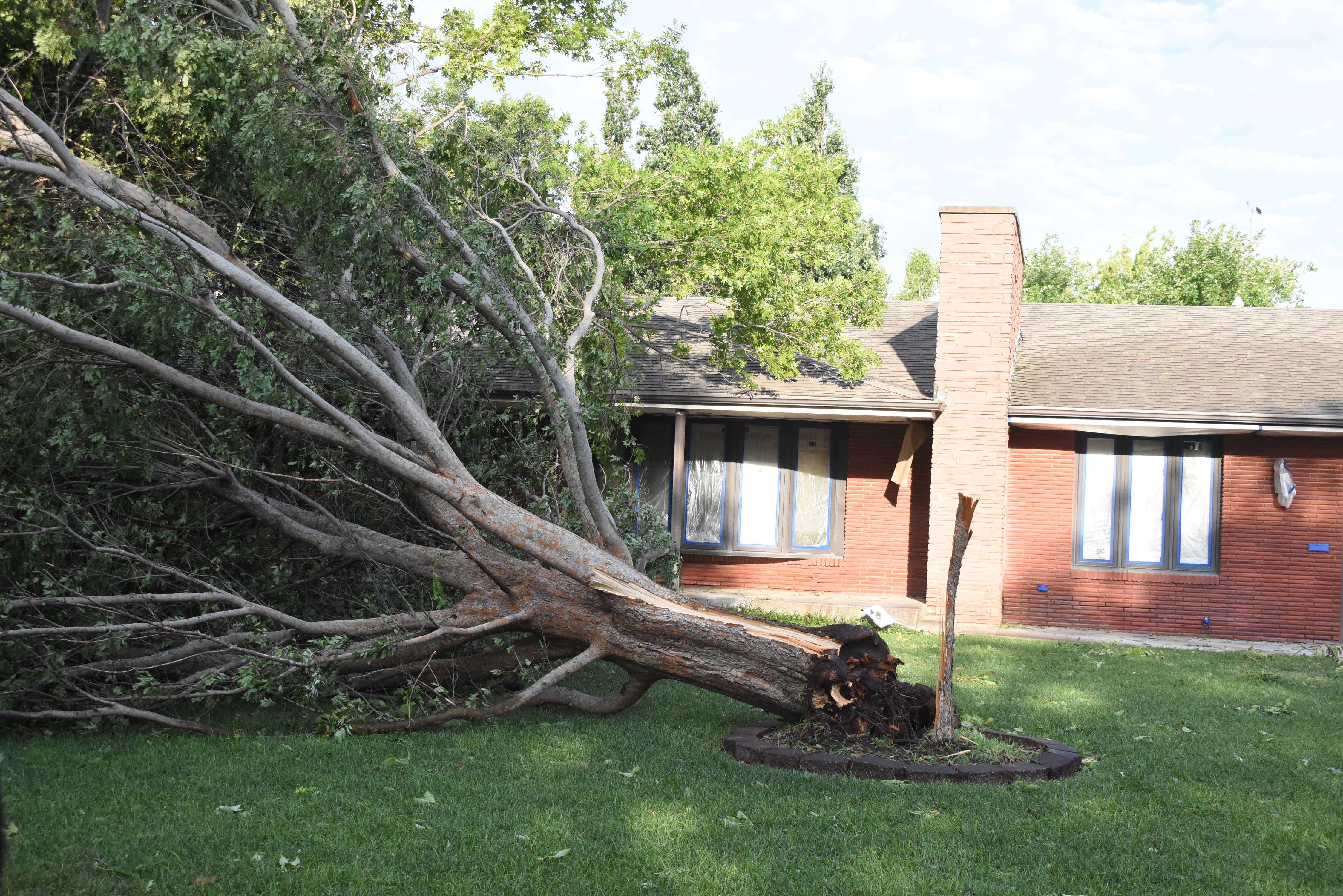
Hayes added that additional weather conditions may have resulted in the many uprooted trees. A perfect combination of drought earlier in the year and recent rains likely played a role.
"I can only surmise the root ball was not running very deep," said Hayes. "I know there were some good rains on Friday which could have softened the top two layers of soil. Also, the drought could be hurting down low and that may have made it more likely for different types of trees to be completely uprooted, which is what we saw with the cedars."
The western third of Great Bend was hit the hardest. The National Weather Service said hailstones up to four inches in diameter were driven into homes by the 70-85 mile per hour winds.