


By MIKE COURSON
Great Bend Post
Great Bend's Center for Counseling and Consultation offers a variety of programs for substance-use disorders. The multi-pronged attack includes individual and group therapies, as well as medically-assisted treatments. Kevin Ford, director of the substance use program, has more than four decades of experience in helping treat various addictions. Yet he's still learning about a new wave of addictions to the over-the-counter product kratom.
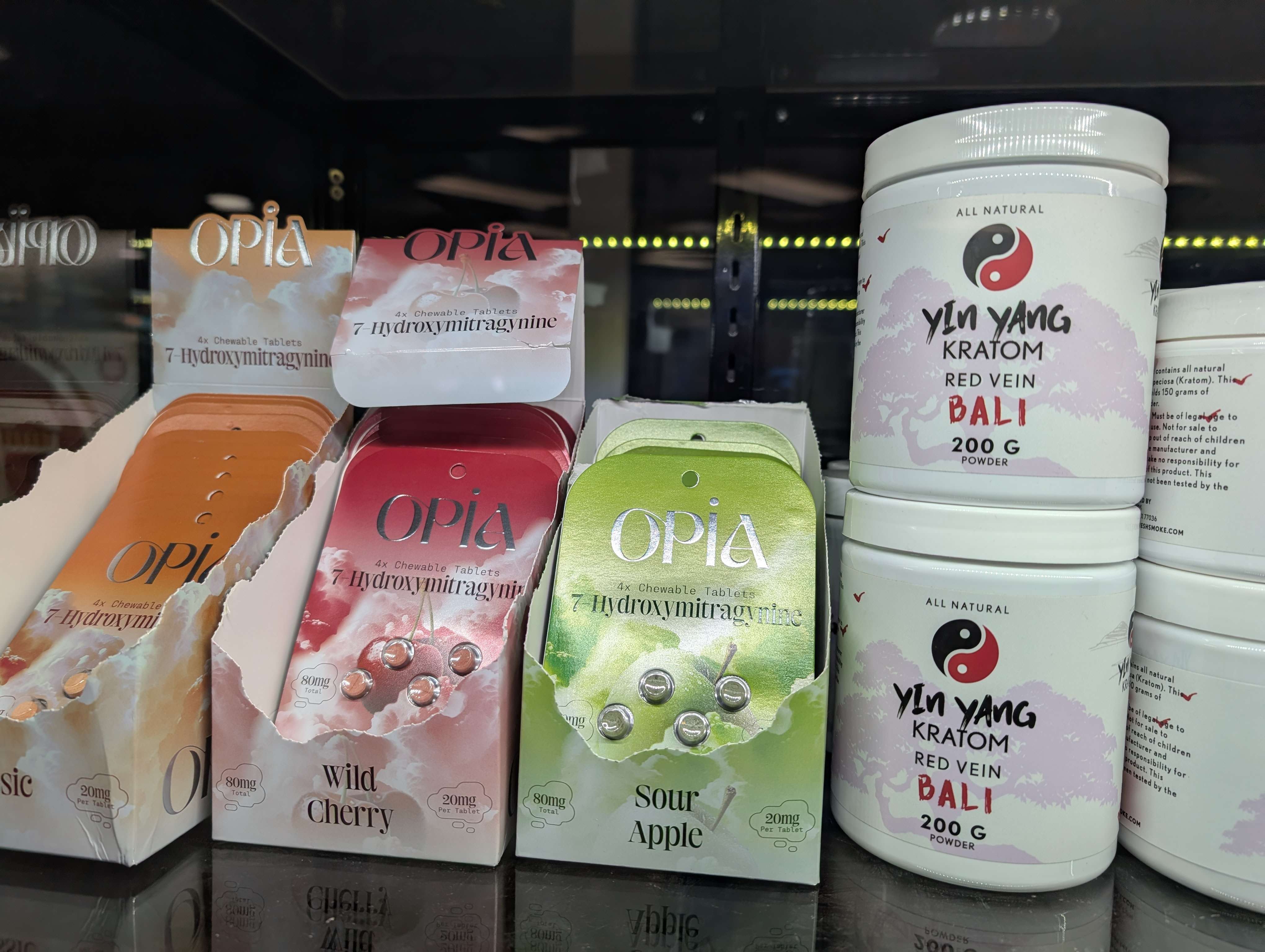
"Especially with the 7-OH, they become pretty quickly addicted," Ford said. "We’re talking about a very large amount of money being spent on these products. The least I’ve ever seen after people get started is $200 a week. I’ve heard of $700 a week."
In September, the Kansas Department of Health and Environment and U.S. Food and Drug Administration issued a public warning about kratom, specifically the risks associated with 7-OH. Kratom and 7-OH are often marketed together in attractive packaging because 7-OH is naturally found in kratom in small amounts. Dr. Patrick Stang with the Center said kratom is a natural product of a particular tree in Southeast Asia. Just two percent of the natural product is 7-OH, while synthetic products available for purchase can contain up to 98 percent 7-OH.

"It doesn’t make very much of a change in a molecule to make a big difference in how it works in your brain or your body," Stang said. "Pharmaceutical companies do this all the time. They’ll take a medication they have, and change it a little bit to either make it more tolerable with fewer side effects or make it more effective."
7-OH products may be in gummy, liquid, tablet, or powder form. KDHE said the product is often sold as if it were the same as kratom, but 7-OH is more addictive. Using 7-OH in combination with alcohol or other sedatives may result in respiratory depression or death.
"It’s been outlawed in about seven states," said Ford. "It’s not outlawed in the state of Kansas, yet. The FDA is looking at it, or the drug enforcement people are looking at it, and trying to get it through the process of becoming illegal. I think it will happen. I think it will be a controlled substance, eventually."
Stang said those who are experiencing 7-OH addiction often come to the facility agitated, shaky, and with high blood pressure. The Center's medically-assisted program can help users get away from the use of kratom by tapering instead of cutting use cold-turkey. Coping skills are also implemented to assist with the mental side of addiction.
KDHE suggests:
Overdose and Treatment:
- Because 7-OH acts on opioid receptors, it can cause respiratory depression and overdose.
- Opioid overdose (including 7-OH) can be reversed with naloxone, a medication that restores normal breathing.
- It is important to recognize that naloxone prevents opioid overdose. However, if 7-OH is mixed with other drugs or alcohol, then naloxone may not fully reverse the effects.
- Naloxone can be administered through the nose or as an intramuscular injection to save a person’s life. Both methods are equally effective.
- Anyone who suspects an overdose should call 911 immediately and administer naloxone, if available.
KDHE Urges Residents to:
- Avoid all products containing 7-OH.
- Read labels carefully when buying candies or supplements.
- Talk to children and teens about the risks of 7-OH.
- Keep 7-OH products away from children and pets.
- Stay informed about overdose risks and keep naloxone available in case of an emergency.
- Consult a healthcare provider before using any supplements, especially anything marketed for pain, energy or mood.
- Seek medical care or call the Poison Help Line at 1-800-222-1222 if you have concerns about 7-OH.