


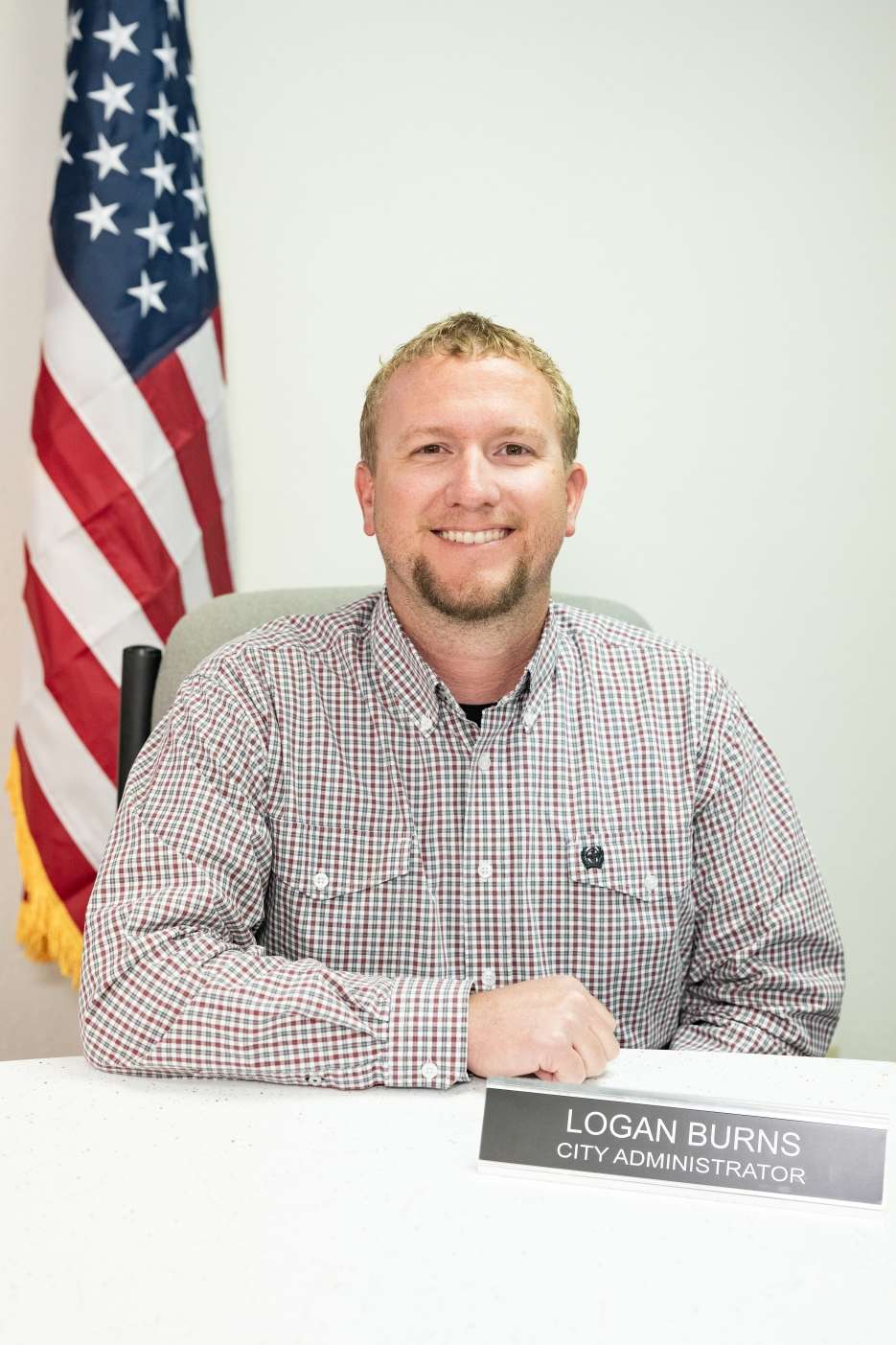
By MIKE COURSON
Great Bend Post
Many important local and state races will be decided at the polls in the Nov. 3 general election. So, too, will a decision that will have a massive impact for the residents of Great Bend, both now and in the future. In that election, Great Bend voters will decide for or against a three-quarter percent sales tax. City Administrator Logan Burns appeared on 1590 KVGB/95.5 FM’s “City Edition” program with Steve Webster Wednesday to explain why approval of the proposed increase is vital.
“I would say this is a legacy question,” Burns said. “You’ve got to know the impacts on decisions you make today are going to have ramifications way down the road. If we can start planning now, and put something into place currently, costs are going to continue to rise. This is the cheapest it’s ever going to be. We’re at a fork in the road right now where you either do something or you don’t. From where I sit in my position, that is something I take very seriously. You have to plan for the future.”
LISTEN: Burns discusses sales tax proposal on 1590 KVGB/95.5 FM's "City Edition"
Great Bend currently levies an 8.7 percent sales tax. The three-quarter cent proposal would raise that to 9.45 percent. In other words, consumers would pay an additional $7.50 for every $1,000 in purchases in the city if the proposal is approved. One-quarter of a cent of the new tax would go towards property tax relief. The remaining half-cent would be dedicated to infrastructure, including an estimated $26.3 million wastewater treatment facility rehabilitation, and the STAR Bond Project aimed at growing the city.
“The wastewater treatment facility, it’s coming regardless,” Burns said. “So, it’s either going to be we pass the sales tax in November, or in January, we’re going to have to raise rates and we start looking at doing this rehab on our own.”
READ MORE: GB Council votes to move forward on STAR Bond Project
Without the additional sale tax revenue, those water rates are expected to increase by $240-300 annually. Burns said the wastewater treatment facility is the driving force of the tax proposal. Built in the 1950s, the facility went through its last major repair in 1997. Burns credits city staff for keeping the facility operational, but the plant is reaching the end of its functional life.
“When you start talking about $240-300 annually that we would have to add into customers’ bills, that’s where the STAR Bond has came into play,” Burns said. “We’re going to have this many visitors coming to town, let’s help share the costs and have them help pay for this instead of solely relying on Great Bend.”
Every extra dollar raised via a sales tax is a dollar not coming from property taxes. The city came up with the STAR Bond Project Plan was a way to increase those sales tax dollars. By adding covered grandstands, concessions, restrooms, and lighting, the city is hoping to bring in more events and larger races to the SRCA Dragstrip. Those racers and spectators will spend money at the Expo Complex and in Great Bend.
“Initially, we were thinking around 10,000 (people), but after some conversations with NHRA, they’re not so much focused on the seating capacity as what you would be able to bring in with an in-and-out experience – people wanting to come back and watch another race,” said Burns. “If that ends up being 5,000 to 7,500, I can see that being more feasible on our end, especially budget-wise.”
Other phases of the STAR Bond Project Plan would lead to more features and economic development for the city. A sales tax is needed to provide the city’s portion of the cost of the plan. Without voter approval of the proposed sales tax in November, the project will not move forward.
Of the proposed sales tax rate of 9.45 percent, 6.5 percent goes to the state and one percent to the county. Burns said, even if the proposal is approved, the city’s new rate would not be out of line when compared to other cities. Dodge City sits at nine percent, Salina is at 9.25 percent, and Hays and McPherson are both at 9.5 percent. A vote in Pratt could push the sales tax there to 10 percent.
“I think you’re going to start seeing a lot of shifting to sales tax, depending on what happens in the legislature, to try and minimize property tax increases.”