


By MIKE COURSON
Great Bend Post
The vision of Ducks Unlimited is wetlands sufficient to fill the skies with waterfowl today, tomorrow, and forever. The nonprofit does it through wetland conservation, with more than 15 million acres conserved worldwide. The Cheyenne-Quivira Chapter centered in Great Bend has raised more than $200,000 over the last two years to fulfill this goal. Committee member Jerry Ney explained why that money is so important.
"Wetlands are one of nature's big filters," he said. "When you see water going into Cheyenne Bottoms, the wetland of the Bottoms filters out a lot of the bad chemicals and that type of stuff, nitrates. Then when water goes downstream, it's cleaner."
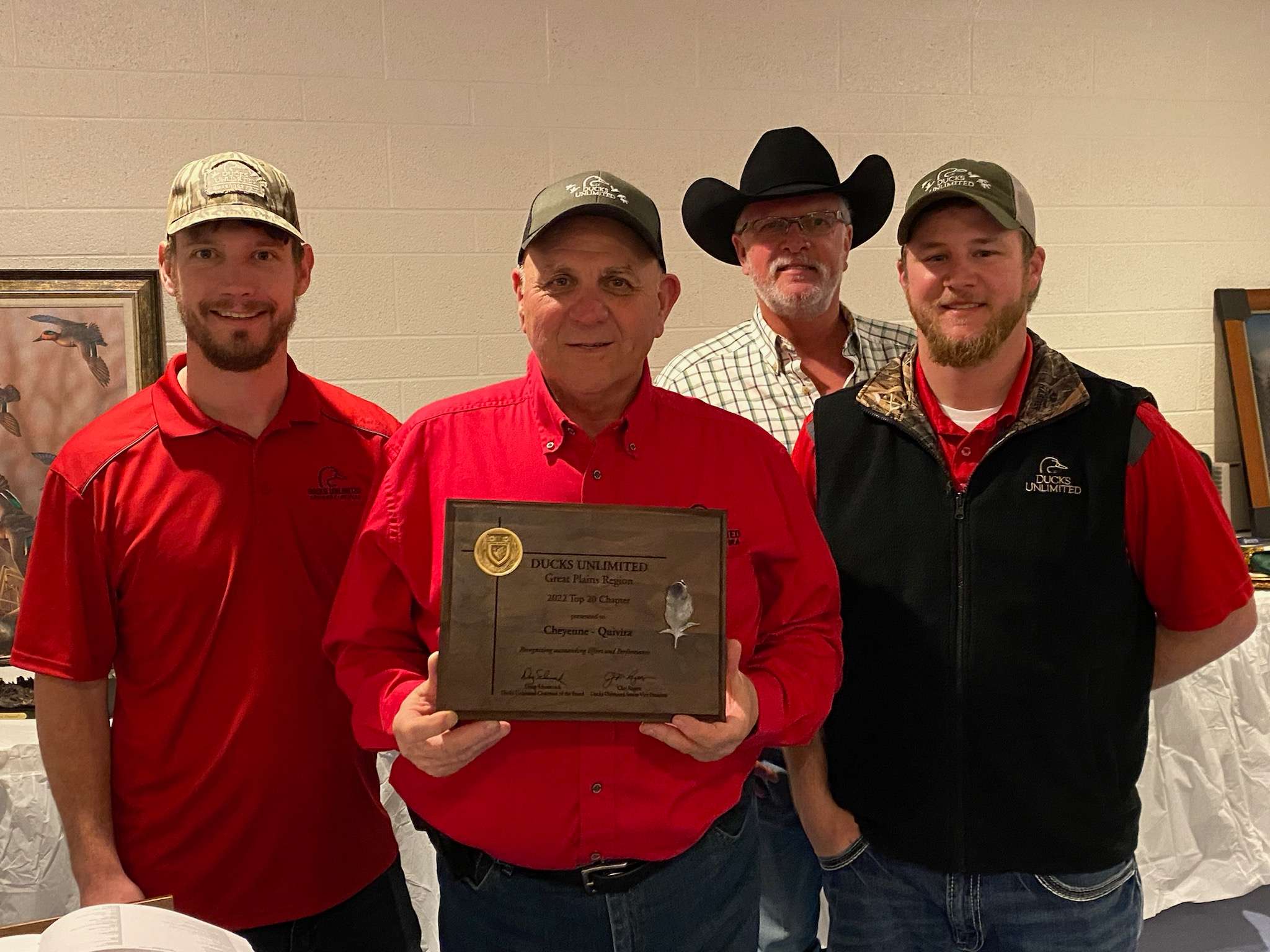
There are some 120 Ducks Unlimited Chapters in Kansas, though some are no longer active. The Cheyenne-Quivira Chapter is always one of the top fundraisers, finishing second in the state in each of the last three years. The Chapter raised $235,000 gross over the last two years, and after expenses, sent $160,000 to DU's national headquarters in Memphis. The 70 active DU chapters in Kansas turn in approximately $1 million each year
"One thing that people don't realize is Ducks Unlimited national turns around, and they give Kansas around $2 million," Ney said. "So we're getting about twice as much money for wetland projects in Kansas as we put in. Most of that is out here at Cheyenne Bottoms, but also Quivira."
Hunters also give to conservation projects indirectly through the Pittman-Robertson Act. Now known as Federal Aid in Wildlife Restoration, the act was passed in 1937 to slow the decline of wildlife species. Eleven percent of the wholesale price of long guns and ammunition and 10 percent of the price of handguns is turned over to the U.S. Fish and Wildlife Services for appointment to states.
The Cheyenne-Quivira Chapter has its own fundraisers, including the big annual banquet with approximately 300 attendees each year. The event features a live and silent auction, and approximately two dozen guns were sold or auctioned at the last banquet. Ney said there are around 350 DU members in the local chapter, but the banquet is capped at 300 due to space considerations.
"We used to have our banquet at the Events Center, but it has changed so much," he said. "We would have to be in charge of getting the caterers and bartenders, and it's quite a bit more expensive - like double. The Knights of Columbus has always been good to us."
Ney is the district chair for Ducks Unlimited, and Billy and Wally Eldridge are co-chairs of the local chapter. Ney said the local leadership has been great in accomplishing the mission to raise funds for conservation.
"We had a tremendous committee this past year," he said. "I've had many people the night of the auction and after tell me it was probably the best committee they've ever seen in a fundraising organization. I'd have to agree."
So where does the money go? In one two-year period, Ducks Unlimited funds went directly to Cheyenne Bottoms without first going through the national office. That state-wide effort raised $700,000. With the addition of federal grants based on those funds, DU was able to give the Bottoms $2.3 million to spend.
Ney estimates some $12 million have been spent at the Bottoms over the past 30 years, and $2 million was spent at Quivira National Wildlife Refuge in two years. Much of that was spent on the replacement of a 70-year-old water-control structure between the Big and Little Salt Marshes. The North American Wetlands Conservation Act funded the project, with matching funds from DU and partners.
"Ducks Unlimited has spent lots and lots of money trying to get salt cedars eradicated because they take a lot water away from the creek - the suck it up," Ney said. "And they're not good for the water, either. They make it really salty."
Ducks Unlimited also purchased two parcels of land near the south end of the Big Salt Marsh. The land has two wetlands and is available to hunters by reservation.