


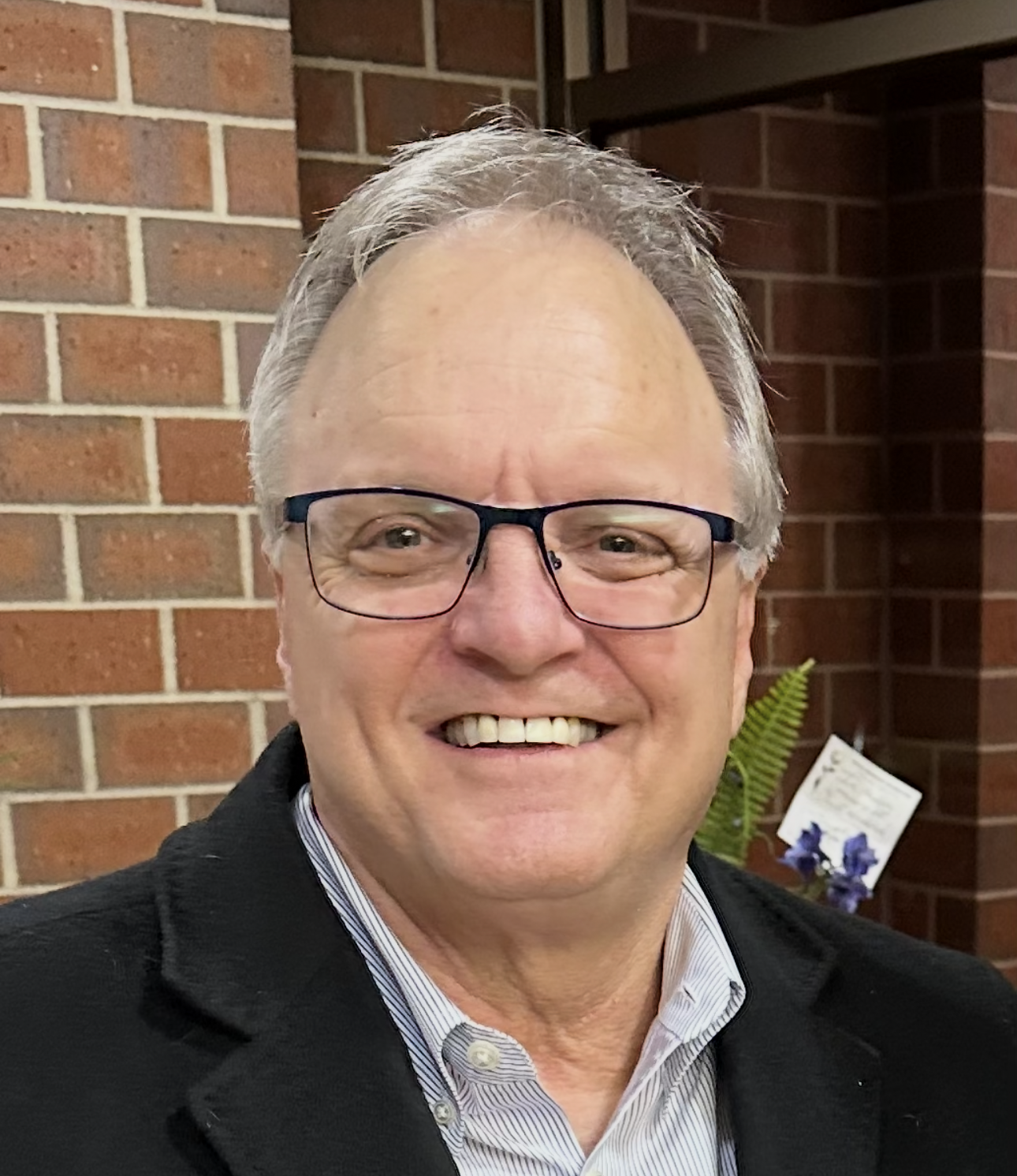
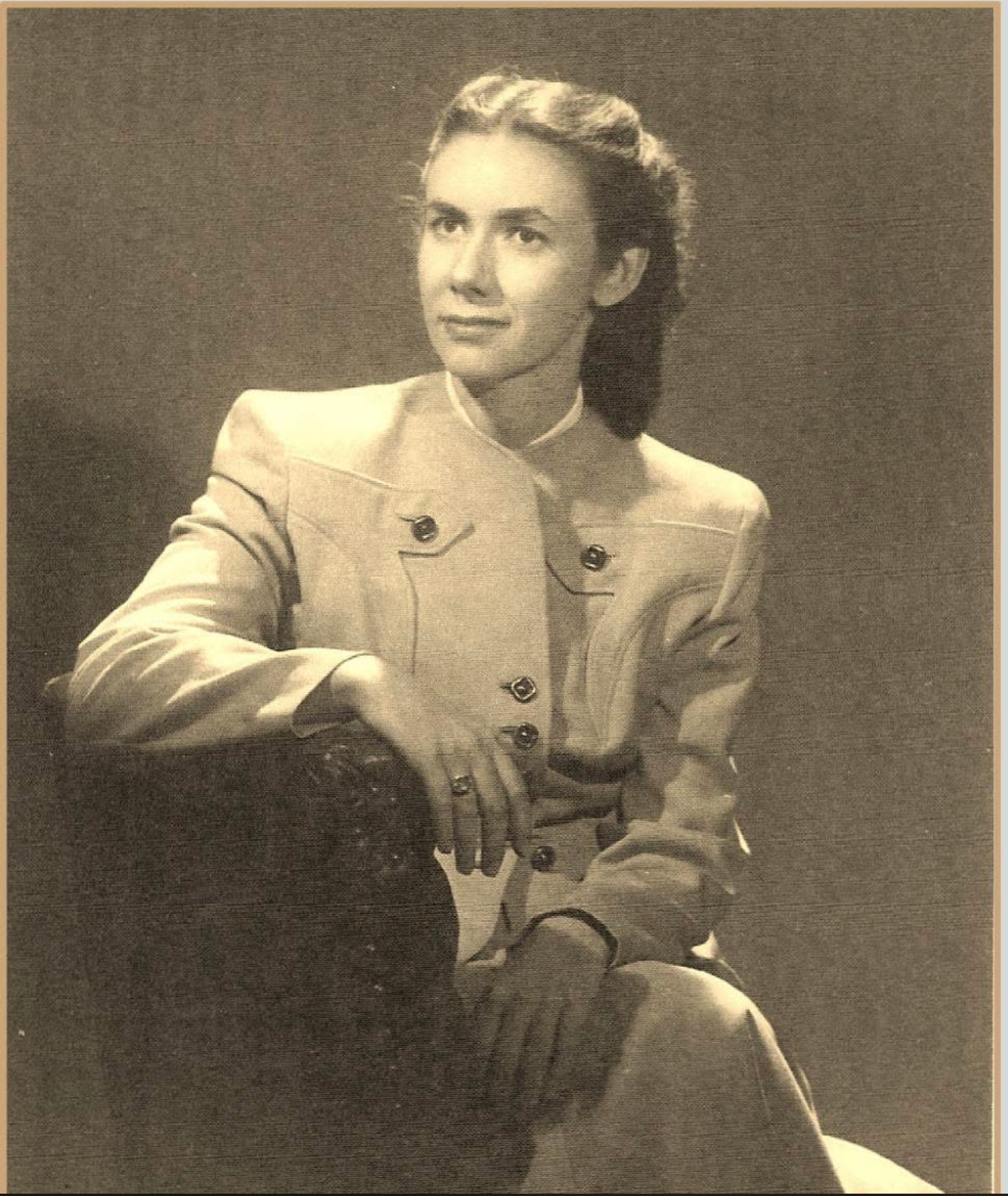
Great Bend native Marty Keenan’s book about Joan V. Bondurant, a World War II spy for the Office of Strategic Services, has been published. Bondurant, the valedictorian of her GBHS Class of 1937, was a music voice major at the University of Michigan when Japan bombed Pearl Harbor. Her relentless effort to serve in the war led to her taking a crash course in written Japanese. She was hired by the mysterious Office of Strategic Services, the precursor to the CIA. She began her work in San Francisco translating Japanese materials seized from homes and businesses of Japanese Americans, to select bombing targets in Japan.
On her 25th birthday, she was asked to serve the OSS in India. Japan had taken several British colonies, including Hong Kong, Singapore and even Burma. Her translations helped stop Imperial Japan from invading British India at Imphal and Kohima.
Spying on the British Raj
When the U.S. secured permission to place spies in British India, the British permitted it only if the U.S. focused on Japan—they were not to pay attention to internal Indian affairs. Churchill was Prime Minister. The British were losing their grip on India due to Gandhi’s protests. Indians referred to British rule as “the Raj,” which means “rule” in Hindi.
With Japan on the ropes, Bondurant took on a secret spy mission to spy on Gandhi’s Indian independence movement. She provided valuable intelligence to the U.S. on how to handle India after the British exited.
After meeting Gandhi, Bondurant became a pacifist before becoming a distinguished nonviolence scholar. Her book, Conquest of Violence (1958), is still considered the best book in the West on Gandhi’s methods.
Friendship with Daniel Ellsberg
When Daniel Ellsberg returned from Vietnam, he read Bondurant’s opus Conquest of Violence and called it a key influence in his decision to release the Pentagon Papers. The reporter at the New York Times who published the Pentagon Papers, Neil Sheehan, said that Ellsberg told him Bondurant’s book was the first book on nonviolence he read upon returning to the U.S. from Vietnam.
When World War II ended, Bondurant remained in India to finish her mission, and was angry that the U.S. helped France regain Vietnam.
Ellsberg and Sheehan had a mutual friend, John Paul Vann, about whom Sheehan tells the story of Vietnam through John Paul Vann’s service in Vietnam in the Pulitzer Prize winning book A Bright Shining Lie (1988). Ellsberg shared a copy of Bondurant’s book with Jesse Vann, John Paul Vann’s son, who came to oppose the war. Jesse Vann was draft-eligible when his father died in a helicopter crash in Vietnam in 1972.
“The book took me 15 years, part-time,” said Keenan. Keenan left Great Bend in 2012 to teach political science in Nebraska. “Teaching gave me time in the summer to get a good start on the book,” he said.
During the summer of 2014, Keenan travelled to Rochester, NY, where the Rush Rhees Library at the University of Rochester preserves Bondurant’s archives, along with such luminaries as William Seward, Frederick Douglass and Susan B. Anthony. In Rochester, Keenan interviewed Gandhi’s grandson, Arun Gandhi, who lived with the Mahatma from age 12-14 at the Sevegram Ashram. Arun Gandhi was a disciplinary case in South Africa, so his dad sent him to live with the Mahatma for two years.
Childhood in Great Bend
Bondurant was born at home on Dec. 16, 1918, just as World War I ended, during the Spanish flu pandemic. A triplet, she was the lone survivor, leaving two stillborn siblings behind.
Price and Minnie Bondurant lived at 2320 Broadway, which the Bondurants built in 1918. Joan’s brother, Keith, was five years older than Joan.
“She was the smartest kid in the class,” said Keenan. Her brother Keith was also bright, attending the prestigious University of Michigan Law School. She was finishing her music degree at the University of Michigan when Pearl Harbor was attacked.
Determined to serve in the war effort, she found a real need: the U.S. did not trust Japanese-Americans to do translations, so there was a shortage of non-Japanese Americans who spoke or read written Japanese. Sadly, loyal Japanese-Americans were held in internment camps due to President Roosevelt’s executive order 9066. Would they let a woman do translations?
When the military later established women’s auxiliary branches such as the WAC’s WAVES and SPARS, Bondurant was ineligible, flunking her military physical due to eyesight problems, including a bad astigmatism issue. During a trip to Ceylon (Sri Lanka) to visit OSS headquarters, Joan met another woman who flunked her physical exam: Julia Williams, who became Julia Child, the famous chef. She failed the physical because she was 6’2”.
British India
Bondurant’s easy manner and curiosity allowed her to befriend and interview many prominent Indians, including Gandhi, Nehru, and many feminist leaders of British India, such as Mumtaz Shah Nawaz. They liked Americans.
After meeting Gandhi, Bondurant converted to nonviolence and got her PhD. At Cal-Berkeley, doing her thesis on Gandhi’s political method. Her thesis became her groundbreaking book Conquest of Violence (1958). Her book is still considered the best book in the West on Gandhi’s philosophy of conflict, which he called satyagraha (“insistence on truth, soul force.”).
One of Joan’s former students at Cal-Berkeley, Dr. Mark Juergensmeyer, author of Terror in the Mind of God (2000) assisted Keenan. He impressed on Keenan to know Bondurant’s signal accomplishment: “Bondurant introduced the West to Gandhi as a thinker of vast importance.”
Today, many universities have nonviolence scholars in their political science, philosophy and religion departments. Also, the Gandhian methods are used in mediation in business disputes, and mediation has become a staple in business schools at various colleges. According to Juergensmeyer the books Getting to Yes (1981) by Roger Fisher and William Ury, and The Third Side (2000) by William Ury employ Gandhi’s signature belief that each party sees the conflict from their angle of vision, and that a mutually agreeable truth is possible.
Bondurant returned to India during the partition of India, independence and Gandhi’s assassination. She saw a group of Gandhi’s followers persuade a group of Sikhs who were beheading Muslims to disperse—they inserted themselves between the Sikhs (who had been kicked out of the Punjab when it became a part of Pakistan) and their would be Muslim victims, offering to give their own lives rather than see another murder.
Great Bend days
Joan’s dad Price Bondurant owned a hardware store, which he sold out to Bentley Hardware Bentley Hardware. Her dad had acquired farmland and became a full-time farmer. Joan’s grandfather was visiting Great Bend in 1915 when a tornado leveled much of Great Bend. He returned home to Kirksville, Mo. and told the newspaper, “it sounded like a hundred steam engines letting off steam at the same time.”
Bondurant’s history professor, Novma Mering was a great influence on her, and also on Jack Kilby, who graduated from GBHS in 1941, before matriculating to the University of Illinois. Kilby received the Nobel Prize in Physics in 2000. Kilby was also an OSS agent in the C-B-I theater, working to improve radio communications by allied troops.
Although she flunked her military physical, Joan defended women who joined the WAC’s, WAVES and SPARS. She mentioned Fay June Aldrich Betty Caraway and Beryl Korb in defending the WACS and WAVES from Great Bend.
Joan's father, Price Bondurant, served on the Great Bend School Board and died in 1969. Her mother then married her high school sweetheart, John Dormois, a printer in Kansas City, Kan. Minnie Bondurant Dormois died in 1978. John Dormois lived to be 100 years old and lived at the Masonic Home in Wichita.
Keenan’s book, BONDURANT: The Spy Who Cracked Gandhi’s Code, is available on amazon.com, but copies will be available soon at the Barton County Historical Society and at Miss Pretty Pickles store on Main Street.
Keenan described the project as a “labor of love.” Keenan saw the movie Gandhi (1982) in Lawrence as an undergraduate studying political science. He was fascinated by Gandhi’s nonviolent method of effecting change.
Karen Neuforth hosted a meeting of the Kansas Humanities Council at the Barton County Arts Center. At the event the Executive Director of Kansas Humanities, Julie Mulvihill, saw information about Bondurant and asked Keenan. “I had never heard of her,” he said.
“Bondurant is better known in India than in the U.S.,” said Keenan. Her book became known by key nonviolence advocates and academics. Keenan said he felt a calling to tell her story. “I was fortunate that she saved everything,” he said. The Joan V. Bondurant Collection at the University of Rochester houses over 50 boxes of curated materials about Bondurant.
Like the Oscar Micheaux project that Keenan and Neuforth pioneered in Great Bend, Keenan indicated he “was fascinated by these undervalued and unknown Great Bend stories.” Keenan was on the Committee to honor Jack Kilby, the microchip co-inventor who won the Nobel Prize in Physics in 2000.
“Great Bend has produced many greats,” he said.
Keenan hopes the book does Bondurant’s story justice. Anyone interested can email keenan at sunflowerlotuspress@gmail.com. Or they can call Keenan at 620-793-0347. Keenan practices law in Wichita at Law Offices of Martin J. Keenan, LLC