


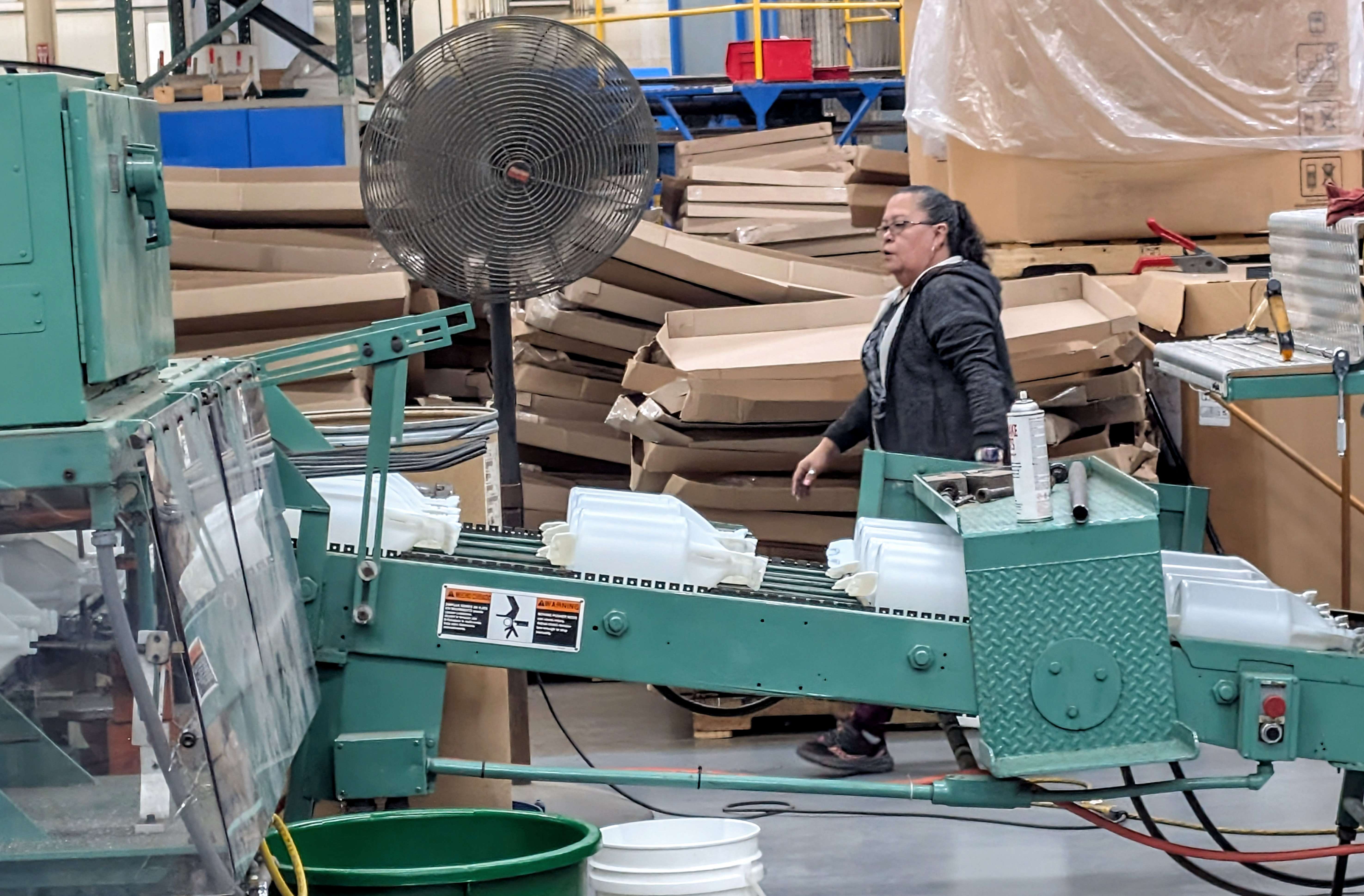
Although Fuller Industries has positioned itself well in the current economic climate, the current supply chain tumult caused by the United State’s war with Iran and the subsequent disruption in petrochemical shipments brought about by the closure of the Streit of Hormuz are creating challenges, General Manager Joe Mann said.
The reason being the conflict has significantly restricted traffic through the strait, a critical corridor for global petrochemical exports, key in fuel and not only plastic and resin production, but also in chemical components that domestic suppliers use to manufacture chemical raws Mann said. Producers in Asia, the Middle East and Europe have been among the hardest hit, as they depend heavily on shipping routes through the narrow waterway. Now those repercussions are now hitting our shores.
“We are getting hit with price increases and fuel surcharges from our chemical suppliers,” he said. A surcharge is paid when using services that involve significant fuel usage, such as freight shipping. “Diesel fuel has been hit particularly hard, and this is already causing price increases across all industries, both for manufacturers and consumers.”
“We’re doing fine for the time being,” Mann said. “But if this drags on, it could become a real problem. We will do our best to absorb the price increases and not pass it on to our customers.”
However, while many companies face rising costs due to global Iran war-related supply disruptions that have sharply reduced overseas petrochemical shipments, Great Bend-based Fuller Industries Inc. “is positioned pretty well,” said Chris Cowles, the company’s vice president of operations.
“We are diversified enough that we can absorb some of this,” he said. The long-time commercial cleaning product maker has developed a network of domestic suppliers for most of their product components, but even their domestic suppliers source a significant amount of their raws from overseas.
“Our supply itself seems fine for now; we aren’t seeing shortages, but pricing is going up across the board.” he said. But should the hostilities continue for an extended period, the company could feel the pinch.
Meanwhile, for manufacturers of consumer goods, the surge presents challenges. Companies that rely heavily on plastic packaging or components are seeing higher input costs, which could ultimately affect retail prices, Cowles said.
He has spoken to some of his colleagues in the industry who are already feeling hit.
American chemical companies, by contrast, are seeing increased demand due to their access to low-cost natural gas and domestic production capacity that does not rely on the disrupted shipping lane.
Polyethylene and polypropylene — two of the most widely used plastics — are among the products experiencing increased demand and higher prices. Polyethylene is commonly used in items such as sandwich bags, detergent bottles and food-service gloves, while polypropylene is found in auto parts, bottle caps, medical supplies and takeout containers.
Major U.S. producers have announced price increases in response to tightening supplies, driven largely by reduced availability of imports. Industry analysts note that even if shipping through the strait resumes quickly, it could take several months for global petrochemical production and logistics to return to normal.
Analysts say essential sectors such as fertilizer production are likely to receive priority as global supply chains recover, potentially extending price pressures for other plastic-dependent industries.