


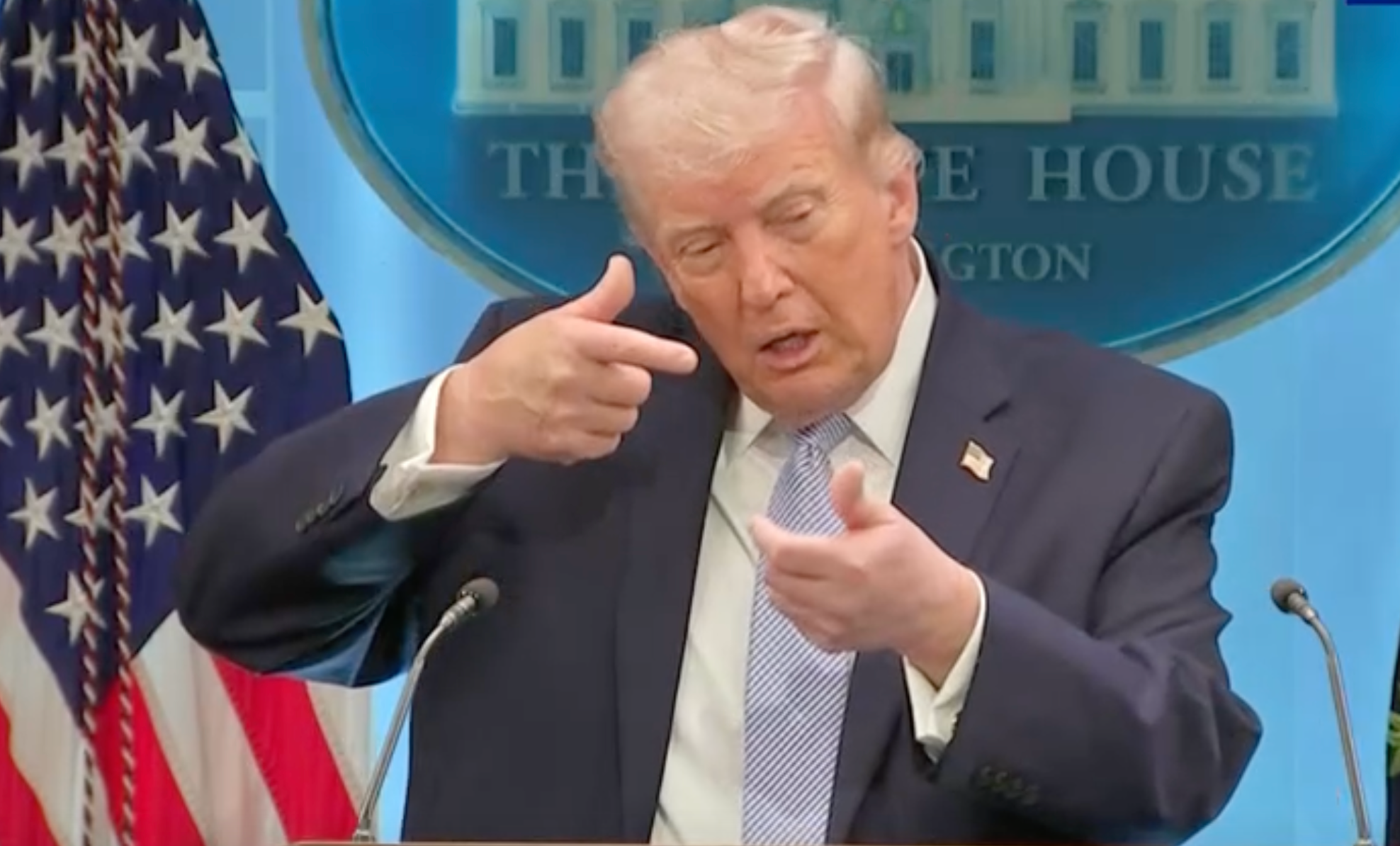
TEHRAN, Iran (AP) — U.S. President Donald Trump pulled back on his threats to launch devastating strikes on Iran late Tuesday, swerving to deescalate the war less than two hours before the deadline he set for Tehran to capitulate to a deal.
Trump said he was holding off on his threatened attacks on Iranian bridges and power plants, as the U.S. and Iran agreed to a two-week ceasefire that includes the reopening of the Strait of Hormuz.
Iran’s Supreme National Security Council said it has accepted the ceasefire and that it would negotiate with the United States in Islamabad beginning Friday. Neither Iran nor the United States said when the ceasefire would begin, and attacks took place in Israel, Iran and across the Gulf region early Wednesday.
Israel has also agreed to the ceasefire, according to a White House official who was not authorized to comment publicly and spoke on condition of anonymity. The ceasefire calls for Israel and Hezbollah to halt fighting in Lebanon, according to the prime minister of Pakistan, which has been mediating talks.
In the version of its 10-point ceasefire plan released in Farsi, Iran included the phrase “acceptance of enrichment” for its nuclear program. But for reasons that remain unclear, that phrase was missing in English versions shared by Iranian diplomats to journalists.
Trump initially had said Iran proposed a “workable” 10-point plan that could help end the war launched by the U.S. and Israel in February. But he later called it fraudulent, without elaborating. Trump has said ending Iran’s nuclear program entirely was a key point of the war.
Iran and Oman to collect shipping fees in Strait of Hormuz
Iranian Foreign Minister Abbas Araghchi said passage through the strait would be allowed under Iranian military management. It wasn’t immediately clear whether that meant Iran would completely loosen its chokehold on the waterway.
The plan allows for both Iran and Oman to charge fees on ships transiting through the strait, according to a regional official who spoke on condition of anonymity to discuss negotiations they were directly involved in. The official said Iran would use the money it raised for reconstruction.
In addition to control of the strait, Iran’s demands for ending the war include withdrawal of U.S. combat forces from the region, the lifting of sanctions and the release of its frozen assets.
Since the war began, Trump has repeatedly backed off deadlines just before they expire.
In doing so again Tuesday, Trump said in a social media post he had come to the decision “based on conversations” with Pakistan Prime Minister Shehbaz Sharif and Gen. Asim Munir, Pakistan’s powerful army chief. Sharif, in a post on X hours earlier, urged Trump to extend his deadline by two weeks to allow diplomacy to advance. He used the same post to ask Iran to open the strait for two weeks.
“Almost all of the various points of past contention have been agreed to between the United States and Iran, but a two week period will allow the Agreement to be finalized and consummated,” Trump said.
There are concerns in Israel about the agreement, according to a person familiar with the situation who spoke on condition of anonymity because they were not allowed to speak to the media. The person said Israel would like to achieve more.
Iran’s stockpile of highly enriched uranium is still buried at enrichment sites. The program had been one of the main issues cited by both Israel and the U.S. in launching the war.
Earlier Trump threats raised alarms
Trump’s expansive threat Tuesday did not seem to account for potential harm to civilians, prompting Democrats in Congress, some United Nations officials and scholars in military law to say such strikes would violate international law.
Tehran’s representative at the U.N., Amir-Saeid Iravani, said the threats “constitute incitement to war crimes and potentially genocide” and that Iran would "take immediate and proportionate reciprocal measures” if Trump launches devastating strikes.
The U.S. and Israel have battered Iran with attacks targeting its military capabilities, leadership and nuclear program. Iran has responded with a stream of strikes on Israel and Gulf Arab neighbors, causing regional chaos and outsized economic and political shock.
Late Tuesday, Pakistan's prime minister urged Trump to extend his deadline by two weeks to allow diplomacy to advance. In a post on X, Shehbaz Sharif, whose country has been leading negotiations, also asked Iran to open up for two weeks the Strait of Hormuz.
Before the deadline, airstrikes hit two bridges and a train station, and the U.S. hit military infrastructure on Kharg Island, a key hub for Iranian oil production.