


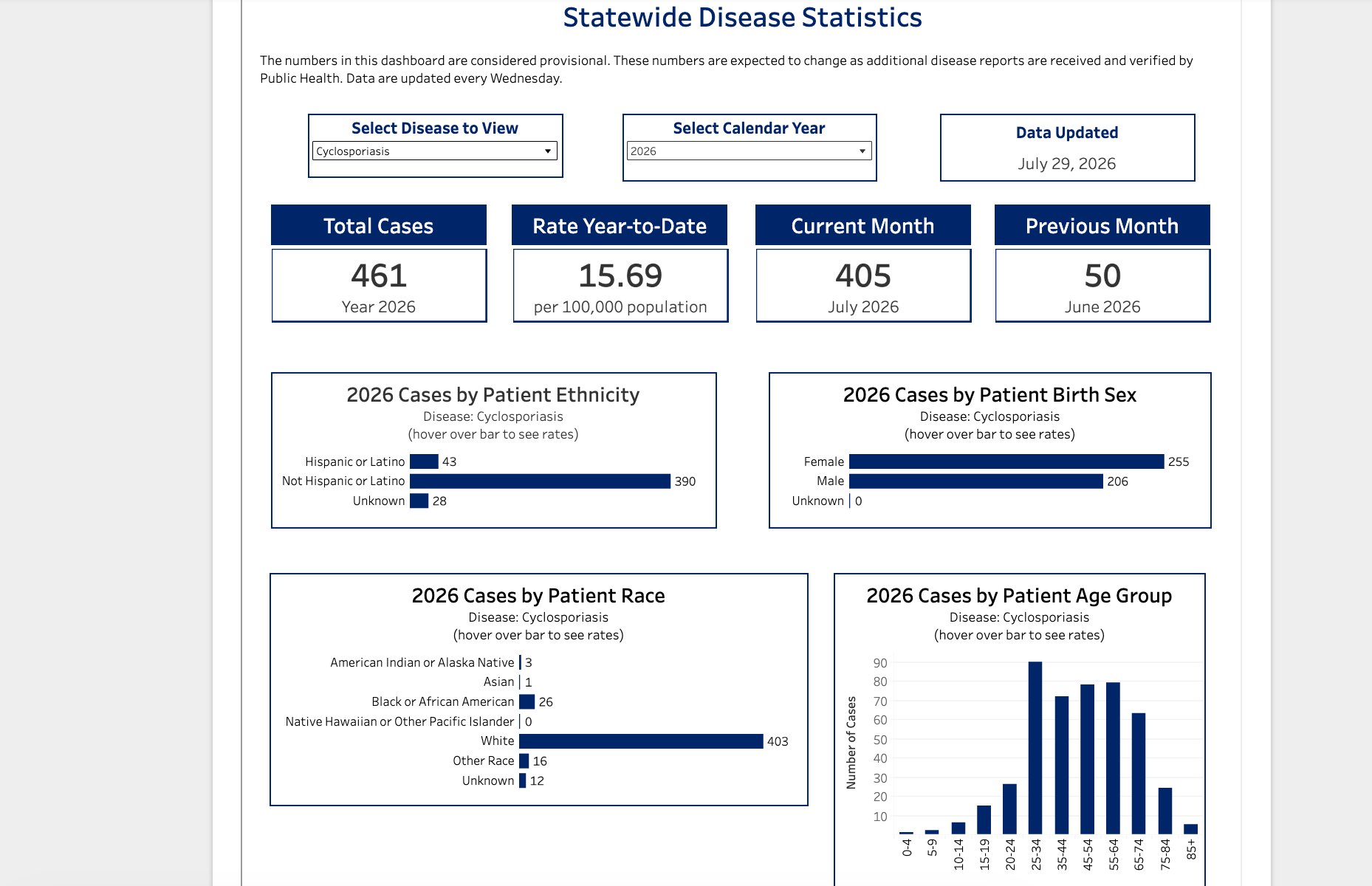
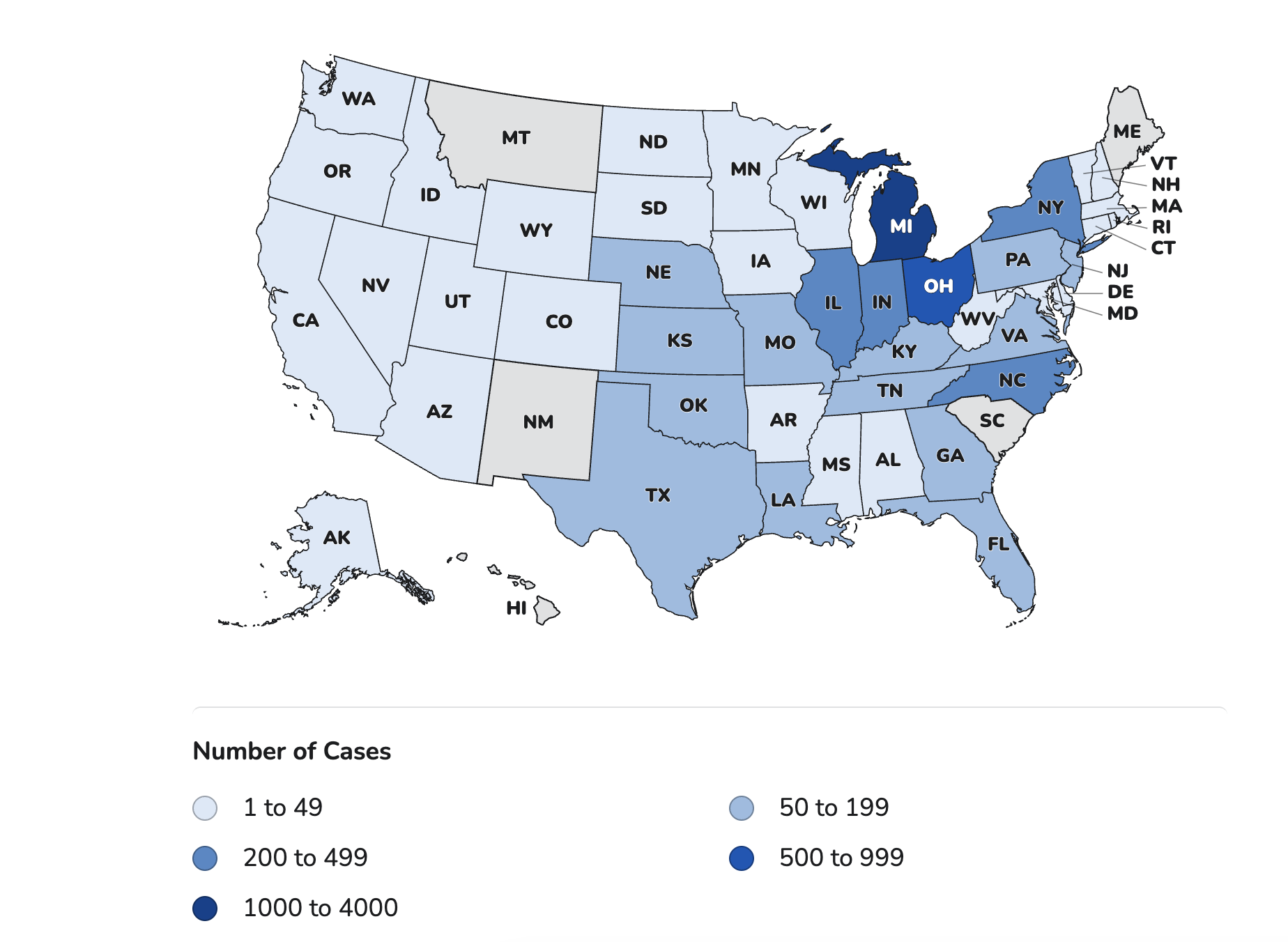
TOPEKA – The Kansas Department of Health and Environment (KDHE) continues to investigate cases of cyclosporiasis in Kansas related to the national outbreak and Taylor Farms de Mexico iceberg lettuce, which was voluntarily recalled from restaurants and grocery stores on July 17. The U.S. Food & Drug Administration (FDA) continues to provide updates on the sources of the cyclosporiasis outbreak on its Cyclosporiasis Response page.
Cases of the illness continue to climb dramatically in Kansas. On Wednesday, the KDHE is reported 461 cases, up from 289 cases last week.
Cyclosporiasis is an intestinal illness caused by the parasite Cyclospora cayetanensis. The parasite is spread through food or water contaminated with feces and is most commonly associated with fresh produce. It is not spread person-to-person. In the U.S., outbreaks in recent years have most often been linked to contaminated fresh produce, particularly during the summer months.
Symptoms
Symptoms typically appear 2 to 14 days after exposure and may include:
- Frequent, watery diarrhea
- Loss of appetite
- Weight loss
- Abdominal cramping
- Bloating
- Nausea
- Less common symptoms includeVomitingLow-grade fever
- Vomiting
- Low-grade fever
If left untreated, illness can last anywhere from a few days to a month or longer. Anyone experiencing sudden gastrointestinal illness should see a health care provider.
Diagnosis and Treatment
Testing for Cyclospora is not part of routine stool testing or most standard GI PCR panels, so patients should ask their health care provider to specifically request Cyclospora testing if it's suspected. (Note: the Kansas Health and Environment Laboratory does not routinely perform this testing.)
The standard treatment is the antibiotic trimethoprim-sulfamethoxazole (TMP-SMX; brand names Bactrim, Septra, Cotrim). No highly effective alternative has been identified for people who are allergic to or can't tolerate TMP-SMX; providers may consider supportive care, other antibiotics with limited supporting evidence, or, for select patients, desensitization under an allergist's care.
How to Protect Yourself
There is no way to guarantee produce is free of Cyclospora — the parasite can cling tightly to food surfaces, so washing alone does not eliminate risk. Still, good food-safety habits are recommended:
- Wash all fruits and vegetables thoroughly under running water before eating, cutting, or cooking
- Scrub firm produce (like melons and cucumbers) with a clean produce brush
- Cut away any bruised or damaged areas before preparing
- Refrigerate cut, peeled, or cooked produce promptly
- Choosing locally grown produce, or growing your own, may help reduce risk
Cooking produce (to at least 158°F / 70°C) can inactivate the parasite. Cooking fresh produce, or avoiding it during periods of high cyclosporiasis activity, is the safest option — especially for people at higher risk of complications, such as young children, older adults, pregnant individuals, and people who are immunocompromised (e.g., chemotherapy patients, transplant recipients).