


By: Tim Carpenter
Kansas Reflector
Bipartisan legislation reflects idea devices distract students, harm mental health
TOPEKA — Central Christian Academy and Atchison County Community Schools serve distinct K-12 populations, but superintendents of both oppose a proposed mandate by the Kansas Legislature to force private and public schools to ban personal cellphones and other electronic devices during school hours.
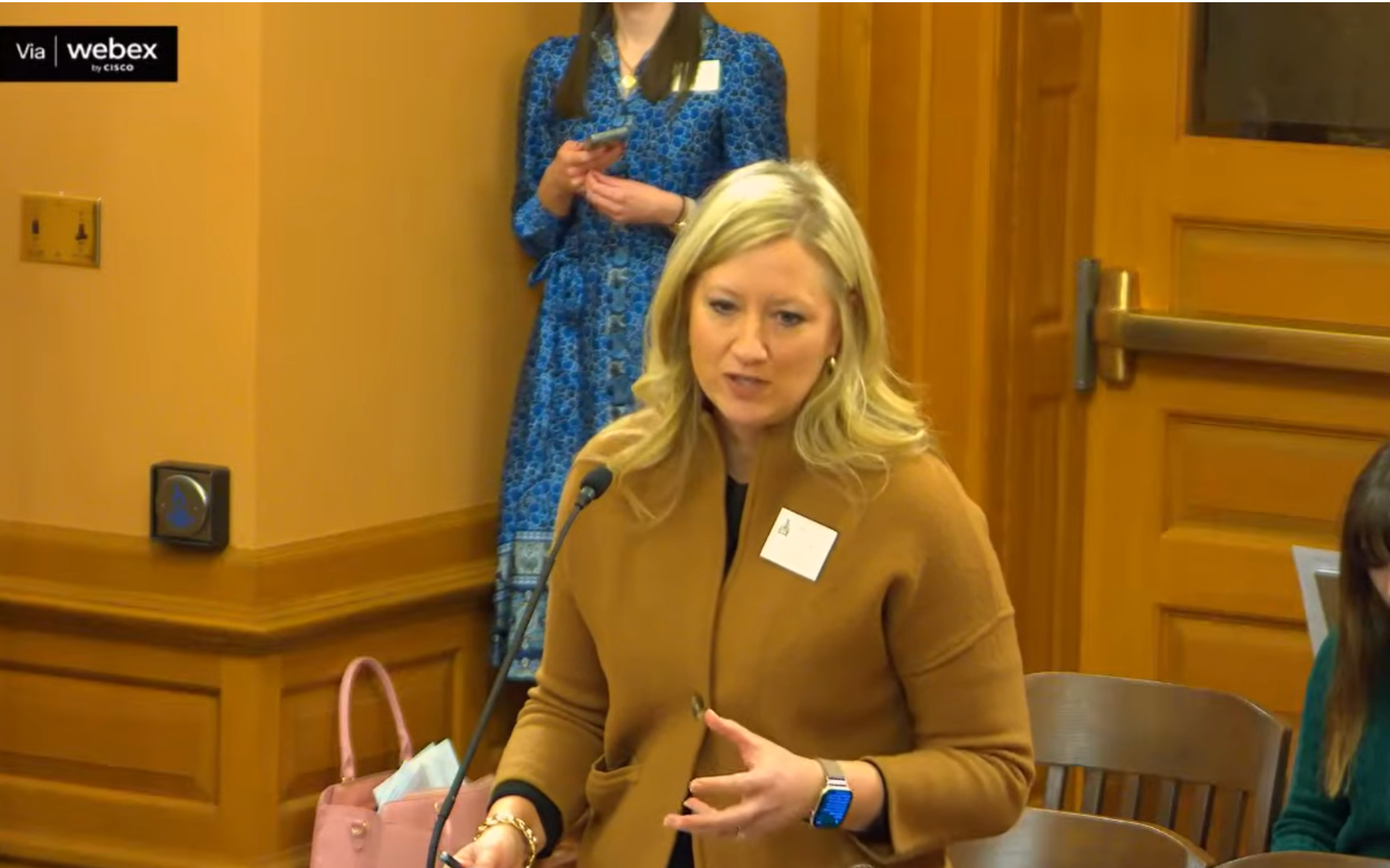
A House Education Committee hearing Friday generated criticism that such a state law would undermine local control of education. Supporters of reform said personal devices could be a classroom impediment to academic success and contributed to mental health challenges of students.
David Landis, superintendent of the 660-student private Christian school in Wichita, said the school’s leadership adopted several years ago nearly all the cellphone restrictions proposed in House Bill 2421. He objected to the Legislature mandating those policies from Topeka.
“We stand opposed to the state making financial and reporting policy decisions on behalf of any private school,” he said. “We ask that HB 2421 be rewritten to exclude all nonpublic schools.”
Andrew Gaddis, superintendent of the Atchison County district and its 500 students, said the bill was a departure from the state’s commitment to the principle of local control in public education. He said elected school boards collaborating with administrators, teachers and families were best suited to adopt policy respectful of local values and culture.
While many public school districts in Kansas previously enacted cellphone restrictions, Gaddis said, a one-size-fits-all law wouldn’t reflect diversity of thought on the in-school use of devices.
“Preserving local control allows districts to adjust practices as student needs change, technology evolves and community input is considered,” Gaddis said.
Democratic Gov. Laura Kelly endorsed the concept of an in-school ban on cellphones. Twenty-eight Republicans and Democrats in the Kansas Senate sponsored a bill creating a statewide ban. In the House, nine Republicans or Democrats did the same.
What will bills do?
Under House and Senate versions of the bill, students attending accredited nonpublic and public elementary or secondary schools would be prohibited from using cellphones, smartwatches and earbuds during instructional time. The prohibition would include lunch breaks and gaps between classes.
The bills would require personal electronic communication devices owned by students and brought to school to be securely stored. The legislation wouldn’t allow storage in backpacks or lockers, but neither bill would provide state funding for schools to buy containers to sequester electronic devices. A legislative document outlining the bills say it could cost nearly $13.4 million for public schools to purchase $30 fabric pouches with locks for 446,000 students.
Exceptions to the ban would be made for students with personal medical issues. Exemptions would extend to students with an individualized education plan, or IEP, and those with a 504 plan outlining school accommodations designed to guarantee equal access to education. Students would be able to contact a parent or guardian with a school-owned telephone or device.
The legislation would forbid school district employees from communicating with students privately or directly through social media apps for official academic purposes.
The bills would direct local public school boards of education or governing bodies of accredited private schools to comply by Sept. 1, 2026. School administrators must report to the Kansas State Board of Education the average amount of time students in first through fourth grades spent on electronic devices with a screen during a typical school day.
A companion bill banning in-school use of personal communication devices was introduced as Senate Bill 302. The Senate Education Committee conducted a hearing on the bill in January.
Supporters of prohibition
Adrienne Olejnik, vice president of Kansas Action for Children, said schools implementing bell-to-bell cellphone restrictions contemplated in the legislation were beginning to see signs that children experienced better relationships, mental well-being and educational achievement.
“Digital devices interfere with so many critical aspects of children’s development and schools should thoughtfully consider how technology is integrated into a student’s day,” she said.
Olejnik said use of individual digital devices wasn’t intrinsically dangerous for children, but it was important schools step in to help young people find a healthy balance.
Kim Whitman, a Kansas leader of Smartphone Free Childhood US, said cellphones and social media platforms were designed to be addictive. A study reported in the Journal of the American Medical Association said students spent an average of 70 minutes per school day on their phones. That added up to loss of the equivalent of 30 instructional days per year, she said.
“When devices are stored away, students focus better and teachers can teach instead of policing phones,” Whitman said.
She said change was necessary because an estimated 11% of Kansas public school students were enrolled in districts enforcing phone-free policies covering the entire school day.
Wichita school board member Ngoc Vuong, a doctoral student at Wichita State University, endorsed the legislation. Vuong urged Kansas lawmakers to respond to unhealthy relationships many children and adolescents had with smartphones and social media.
“While I recognize and respect the local control argument, as a researcher and local school board member, I have come to the conclusion that, given the universality of problematic smartphone and social media use and its disproportionate impact on K-12 students, state-level action is necessary to mitigate its harms and promote more constructive, focused and engaging learning environments,” Vuong said.